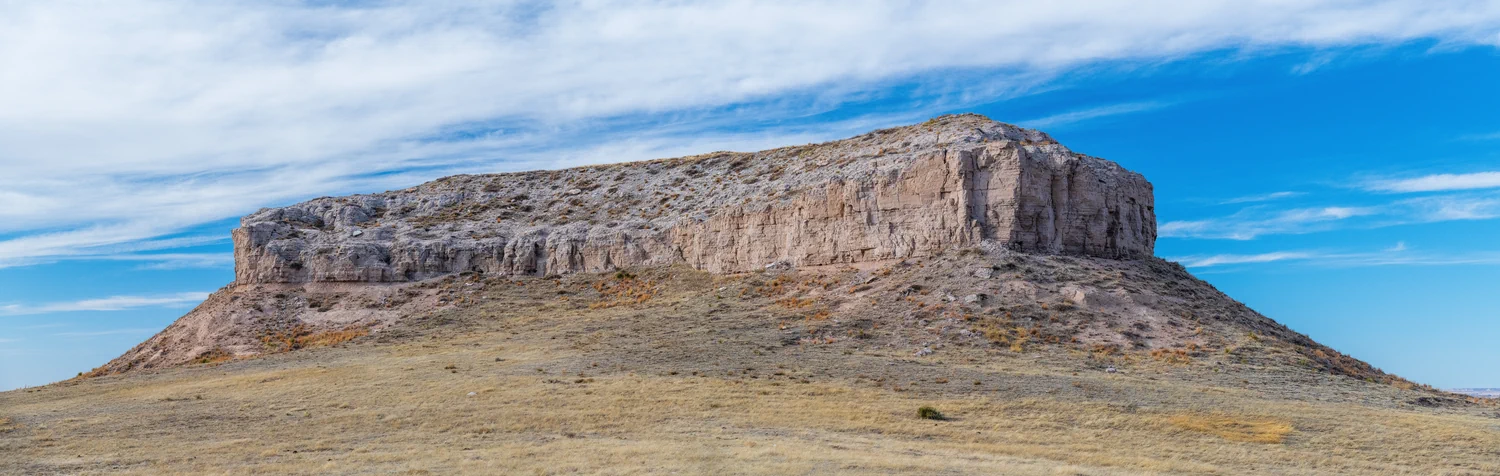
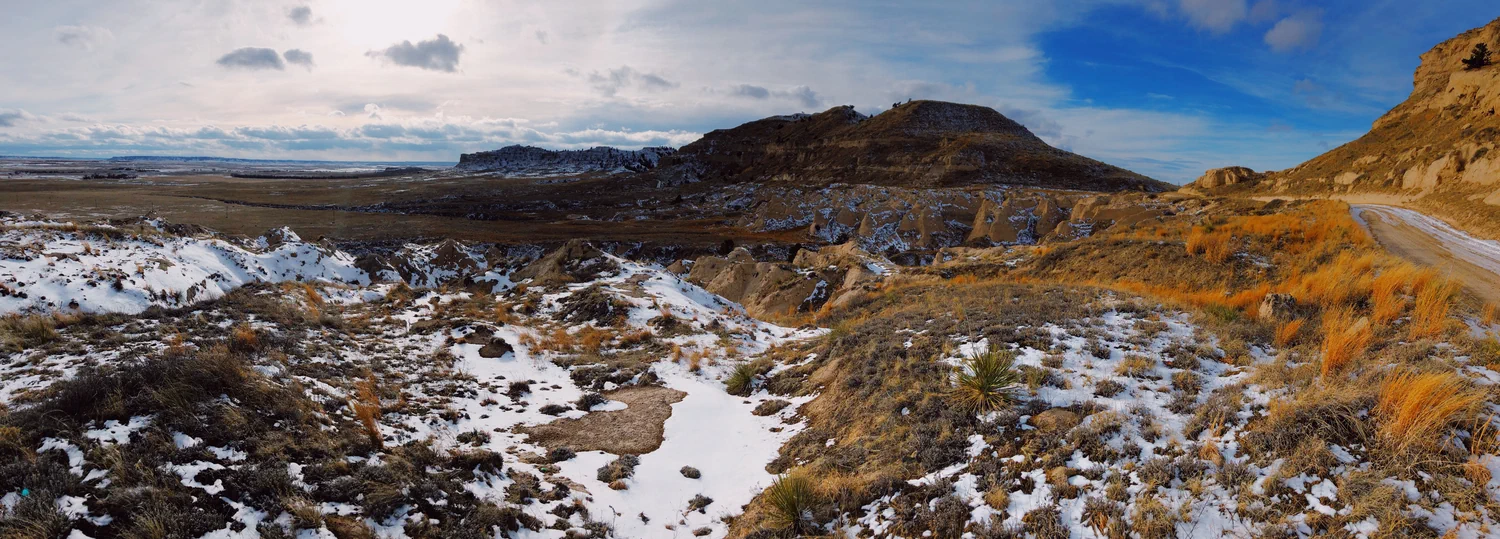
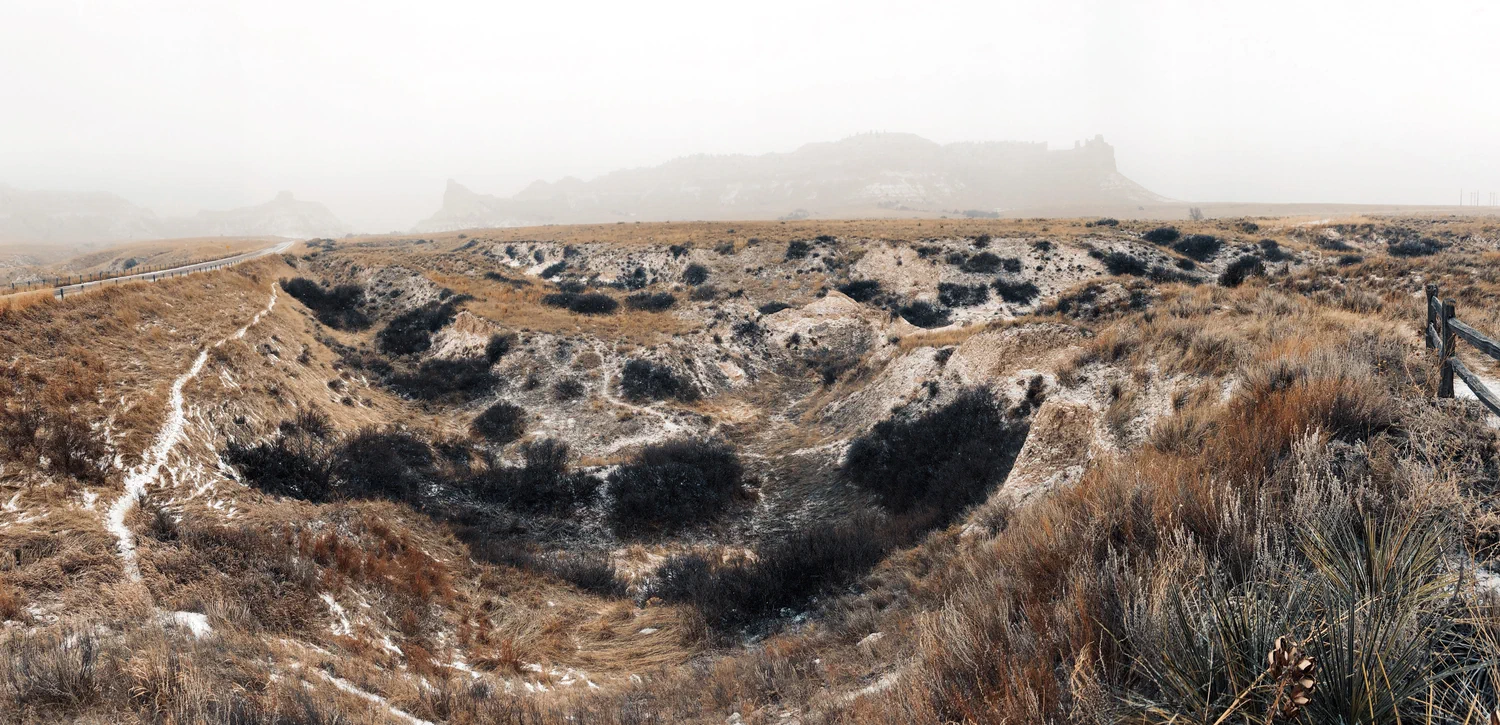
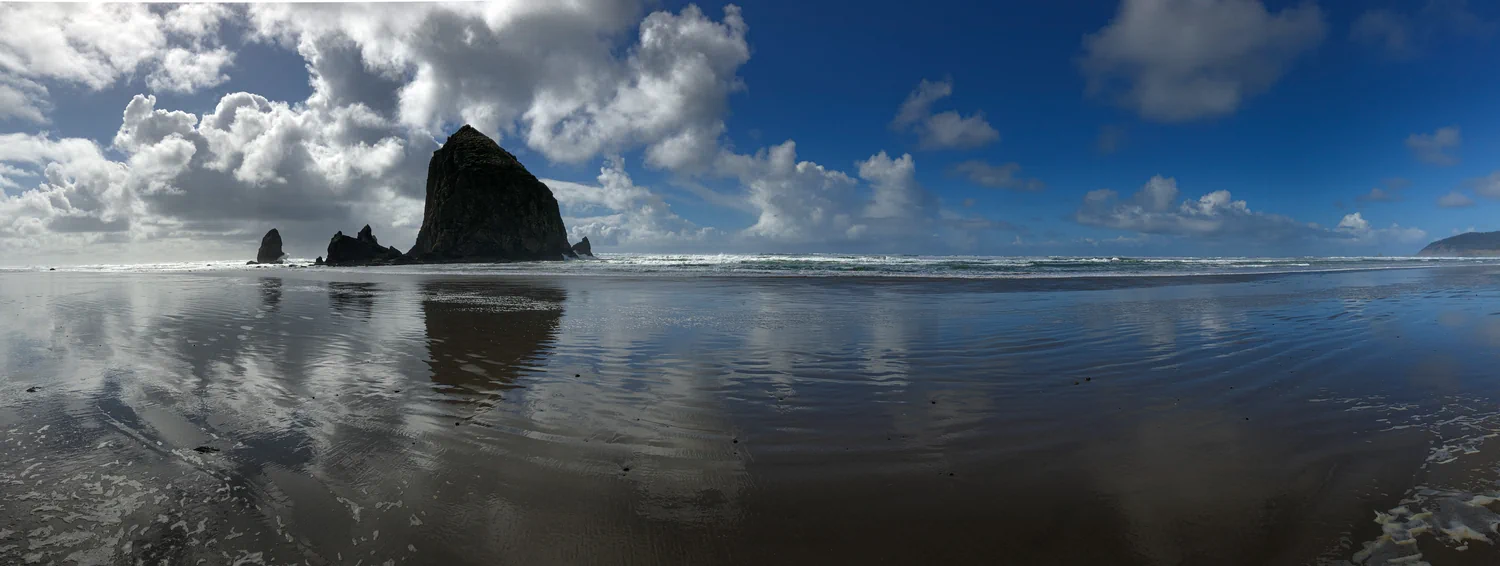
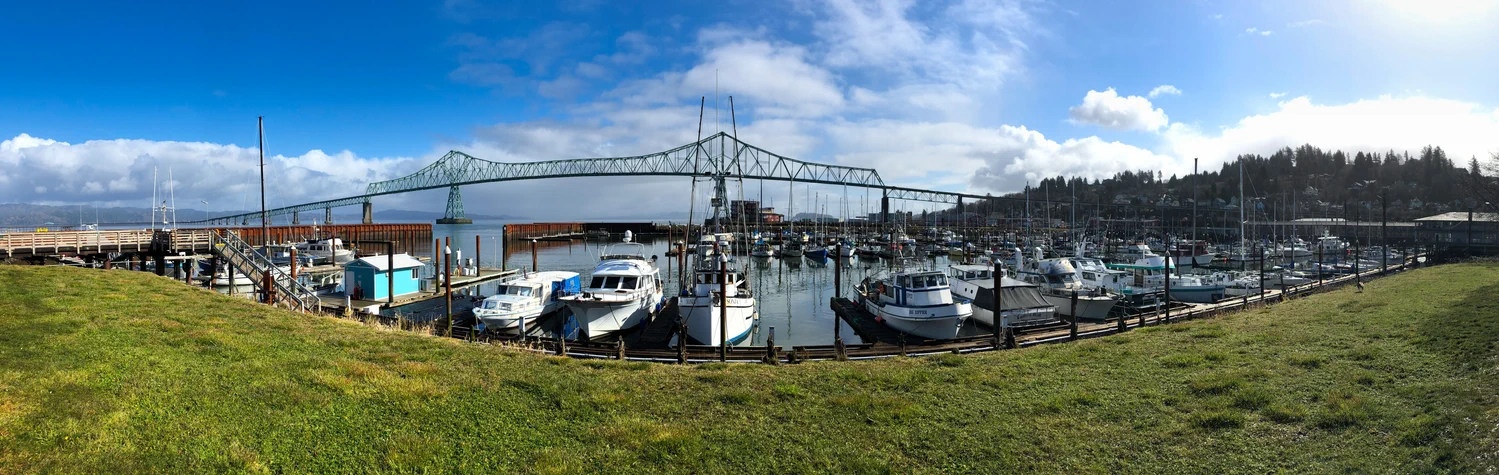
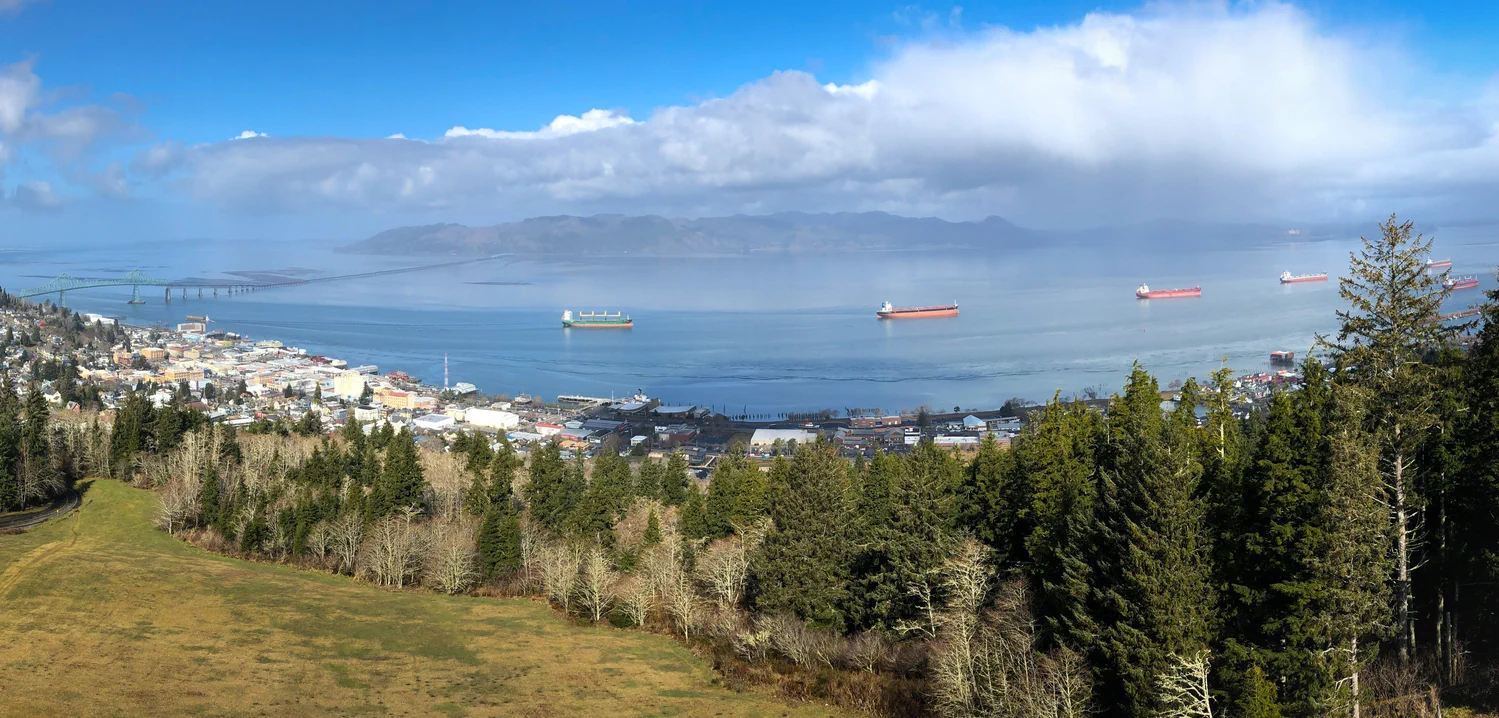
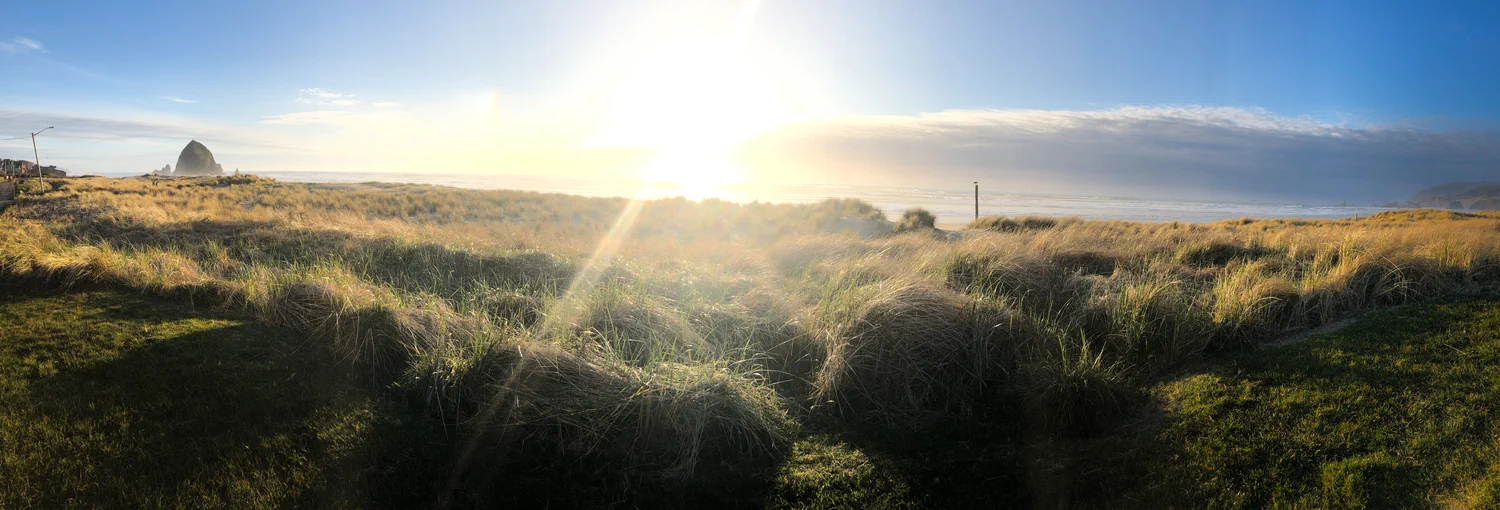
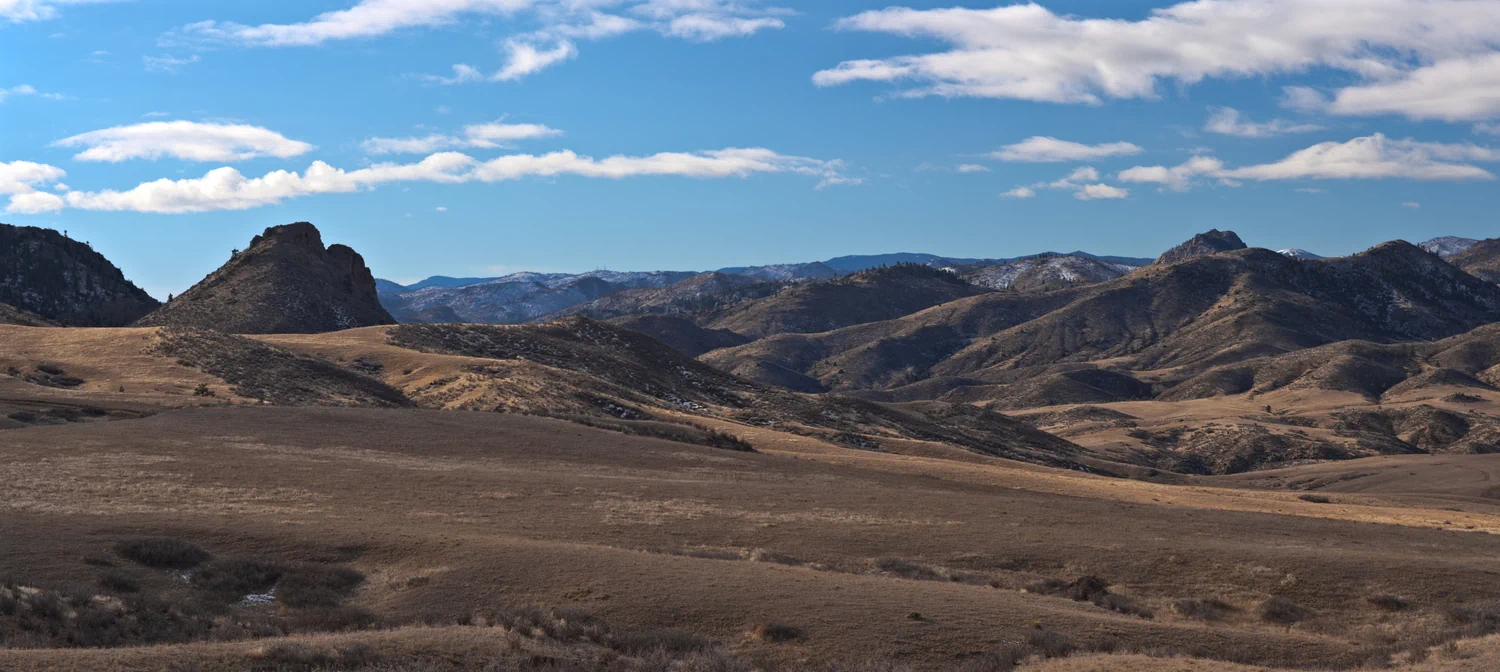
Panoramic photography has always felt a little closer to the way the human mind actually remembers a place. When I stand somewhere with a camera — whether it’s out in western Nebraska with those wide horizons or up in the mountains — the scene never feels like a small rectangle. It feels big. It wraps around you. A single frame often feels like a compromise, like you’re trying to stuff a cathedral into a shoebox. A pano lets the scene breathe. It lets the landscape stretch its legs the way it does in real life. When I stitch frames together, I’m not just making a wide picture — I’m rebuilding the experience of standing there and turning my head slowly across the horizon.
What makes panoramic photography cool to me is that it turns the viewer into a participant. Their eyes have to travel across the frame instead of glancing at it and moving on. It forces a slower kind of seeing, almost like reading a sentence from left to right. Details start revealing themselves along the way — a cloud formation here, a ridge line there, maybe a tiny human element lost in the distance. Panos also have a quiet power because they exaggerate scale. A small hill becomes part of a massive landscape, and the viewer suddenly understands just how big the world around that moment really was. In a strange way, panoramic photography is less about showing everything and more about reminding people that the world is bigger than the frame they usually look through.