
Public protest is the closest thing I have to street photography. I live in a small town where the streets are usually empty, which makes traditional street photography difficult. Because of that, I turn to public events and demonstrations. They give me the same raw, unscripted human moments that street photography is built on, and they allow me to create the kind of black-and-white images I’m drawn to.
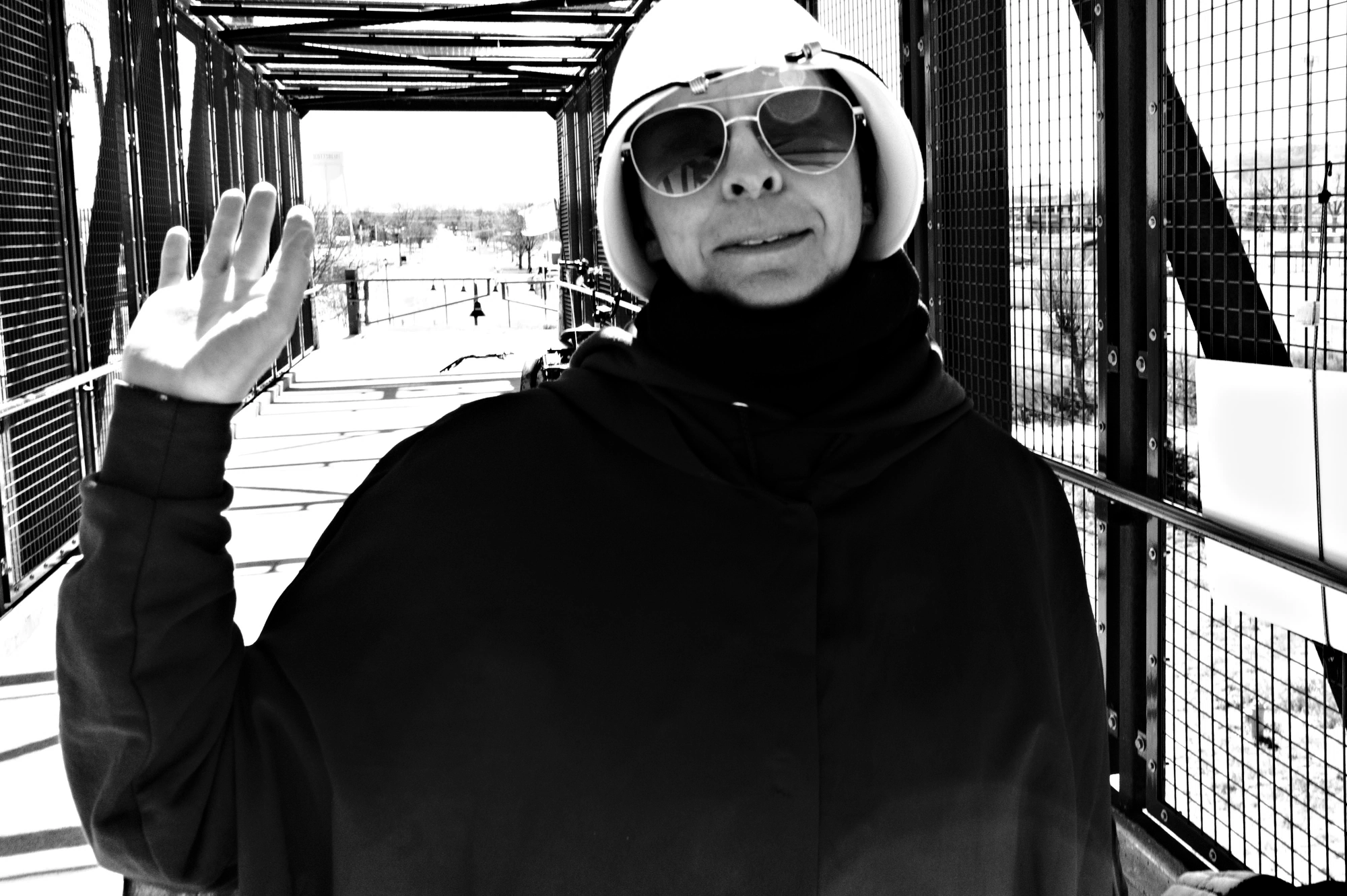
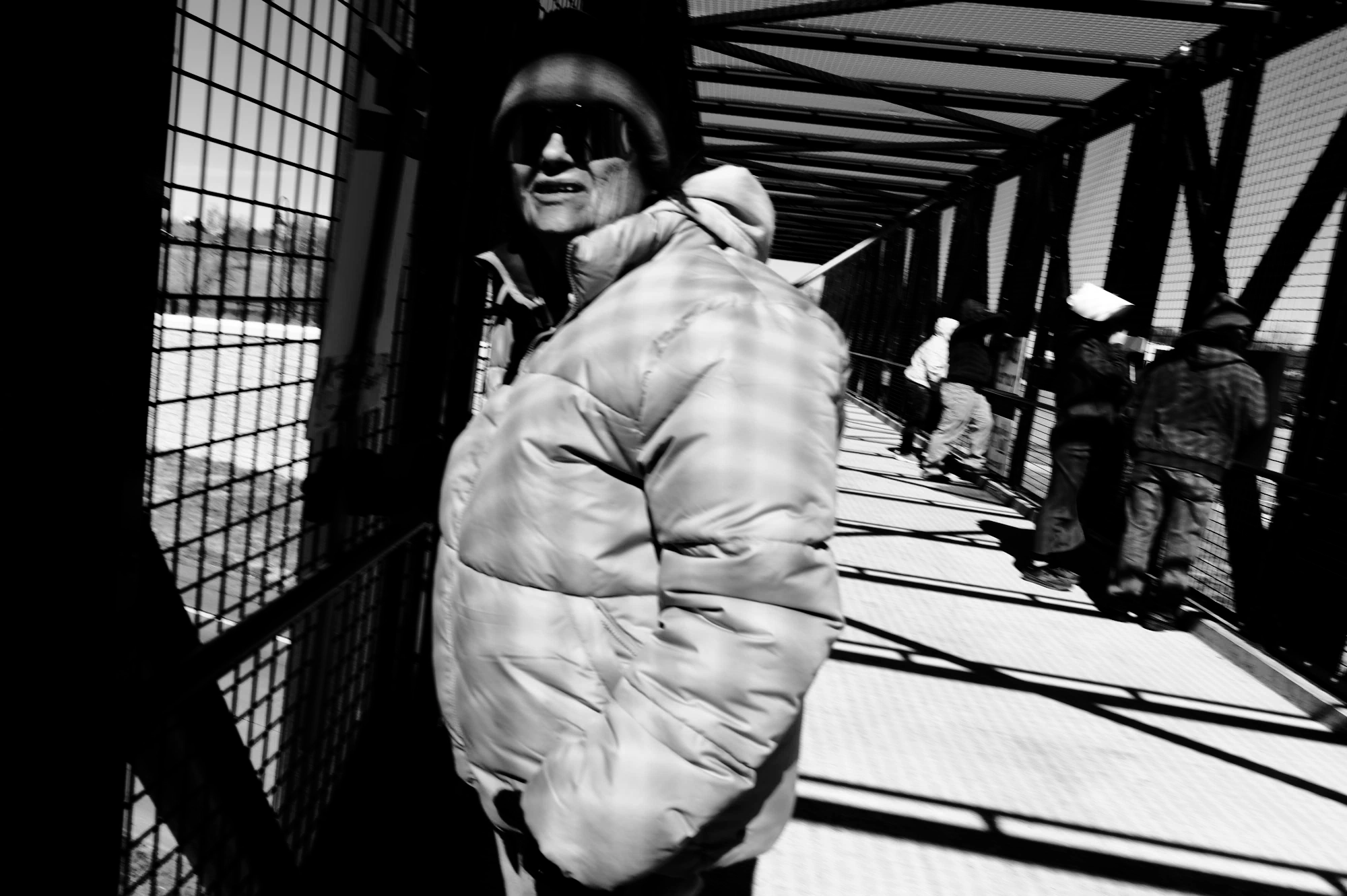
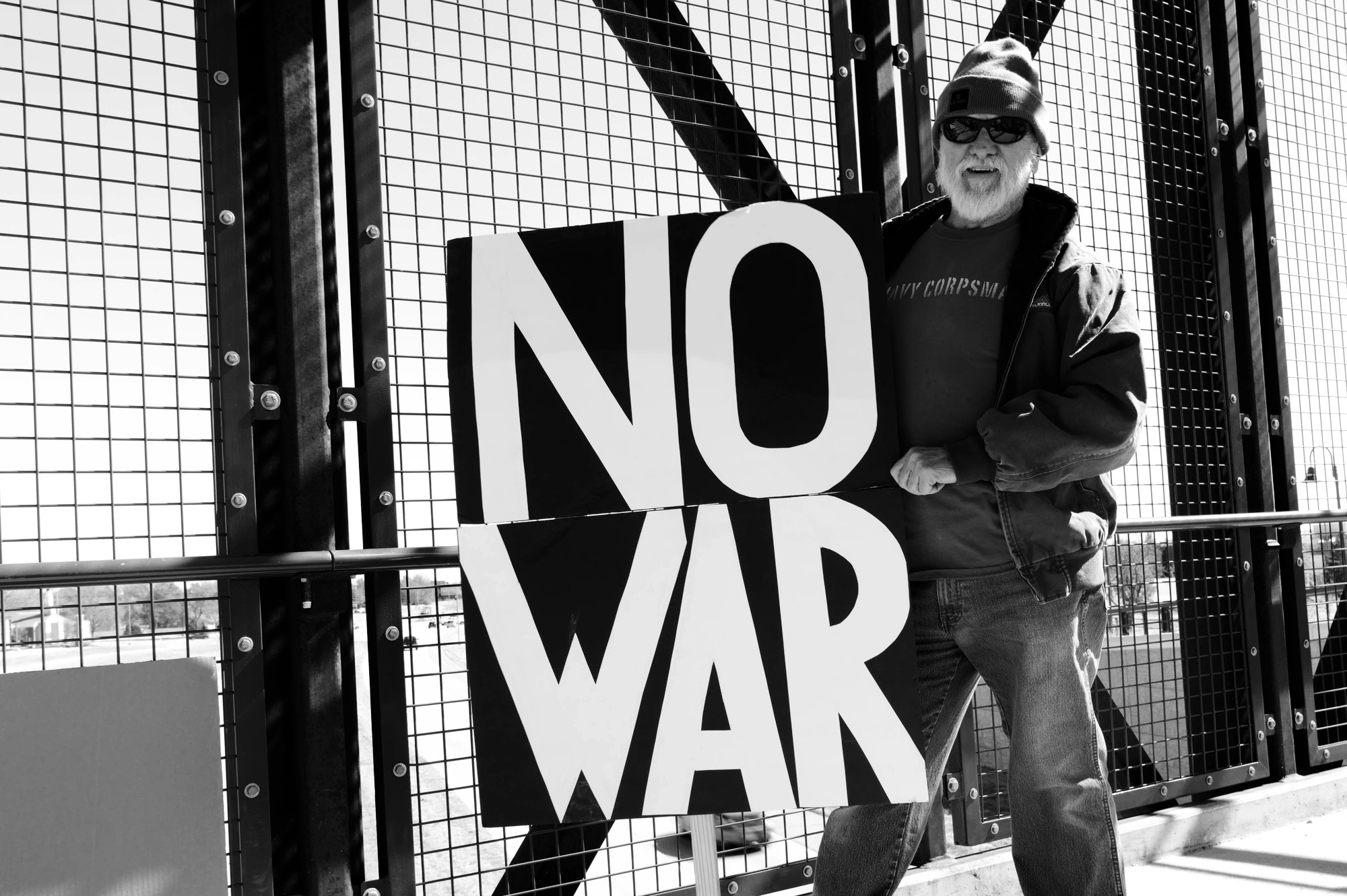
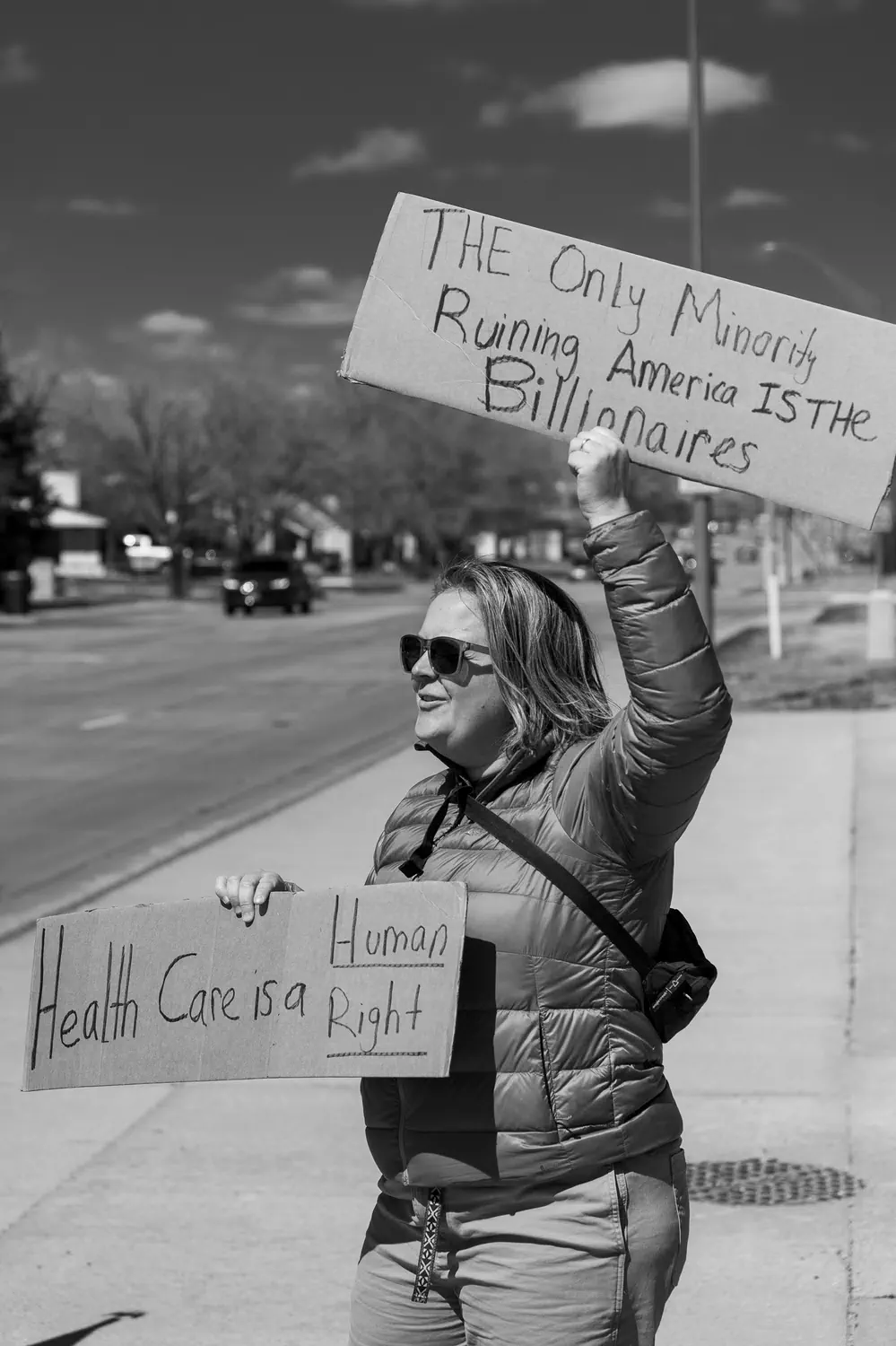
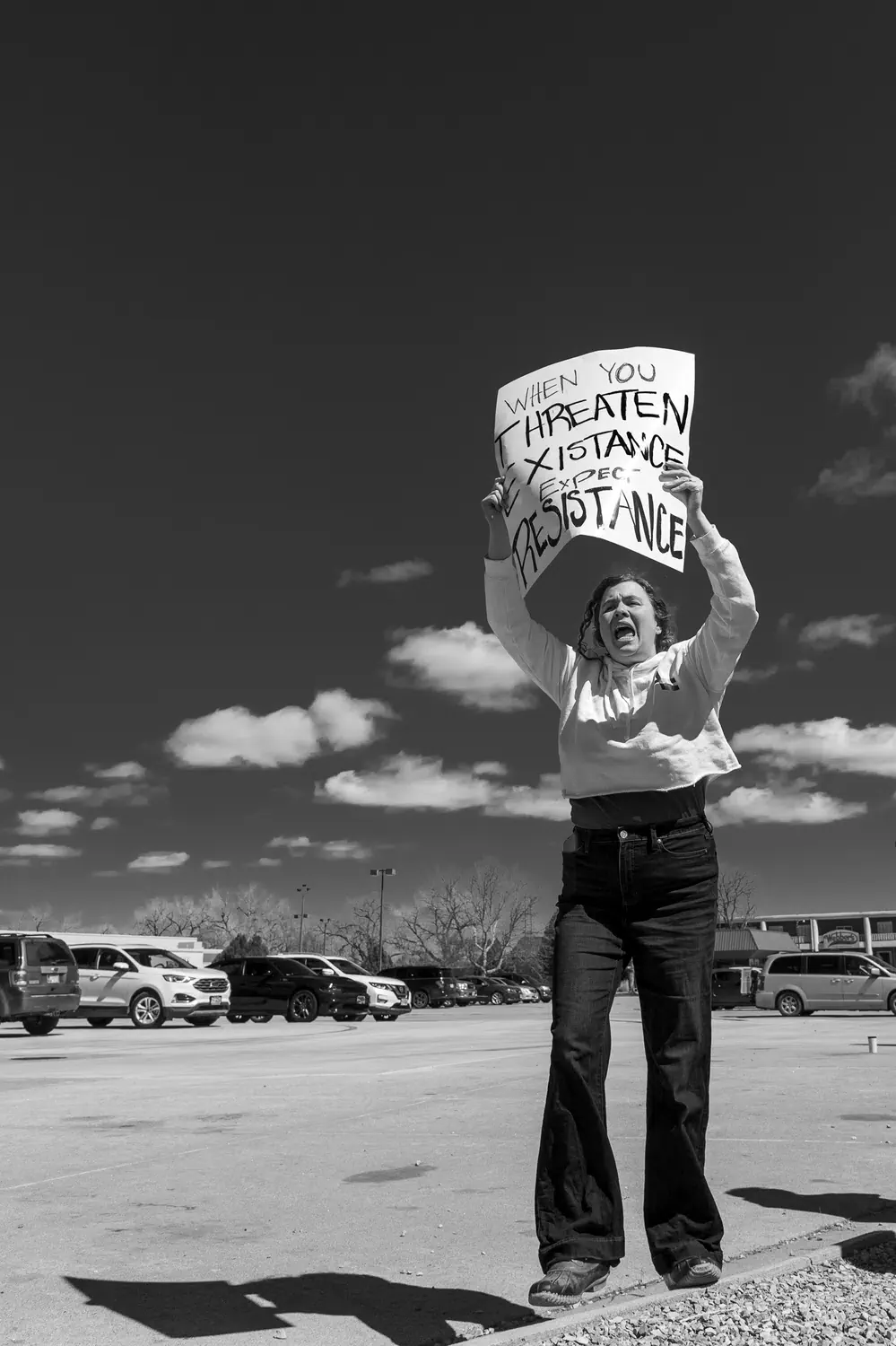
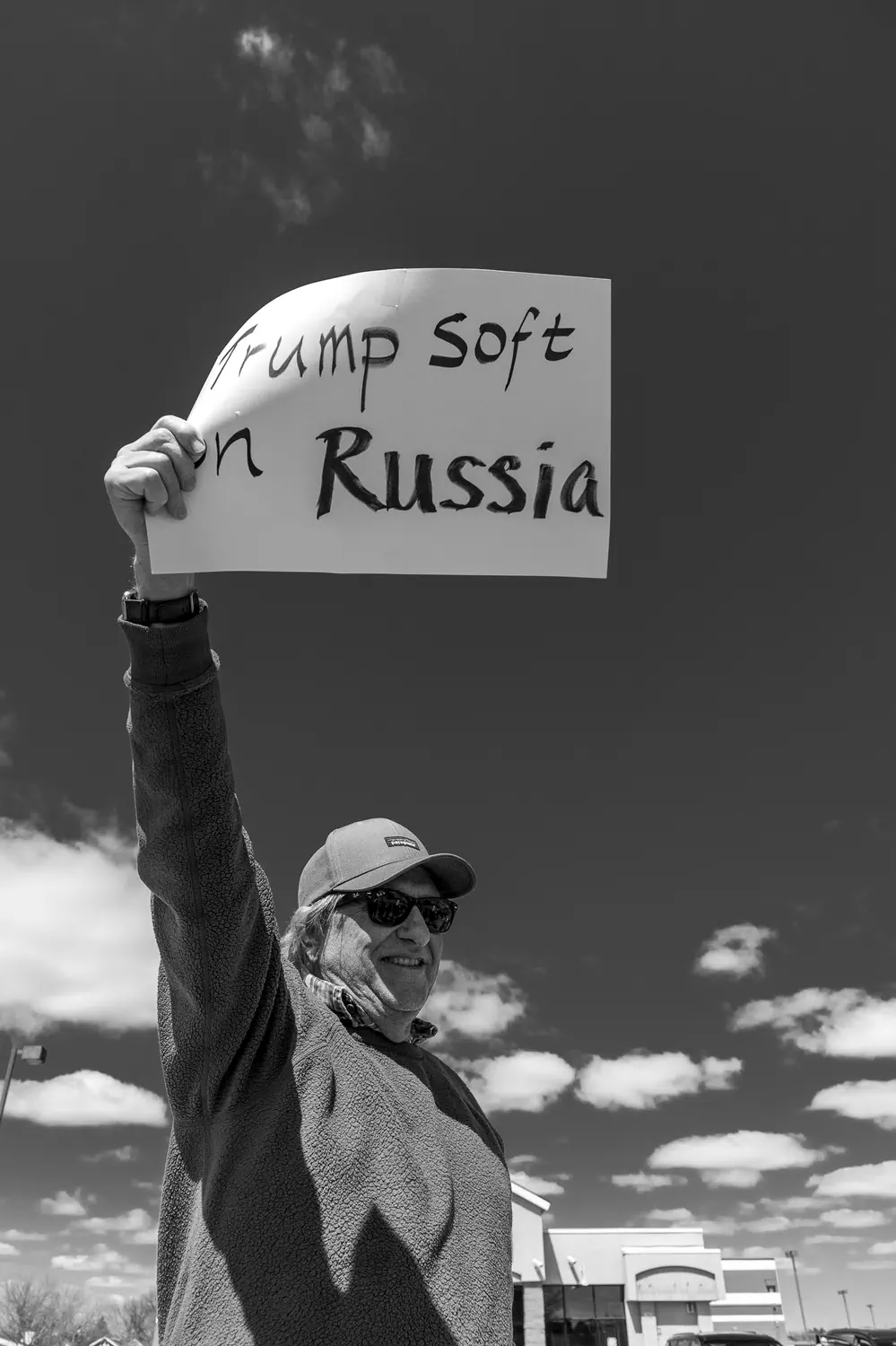
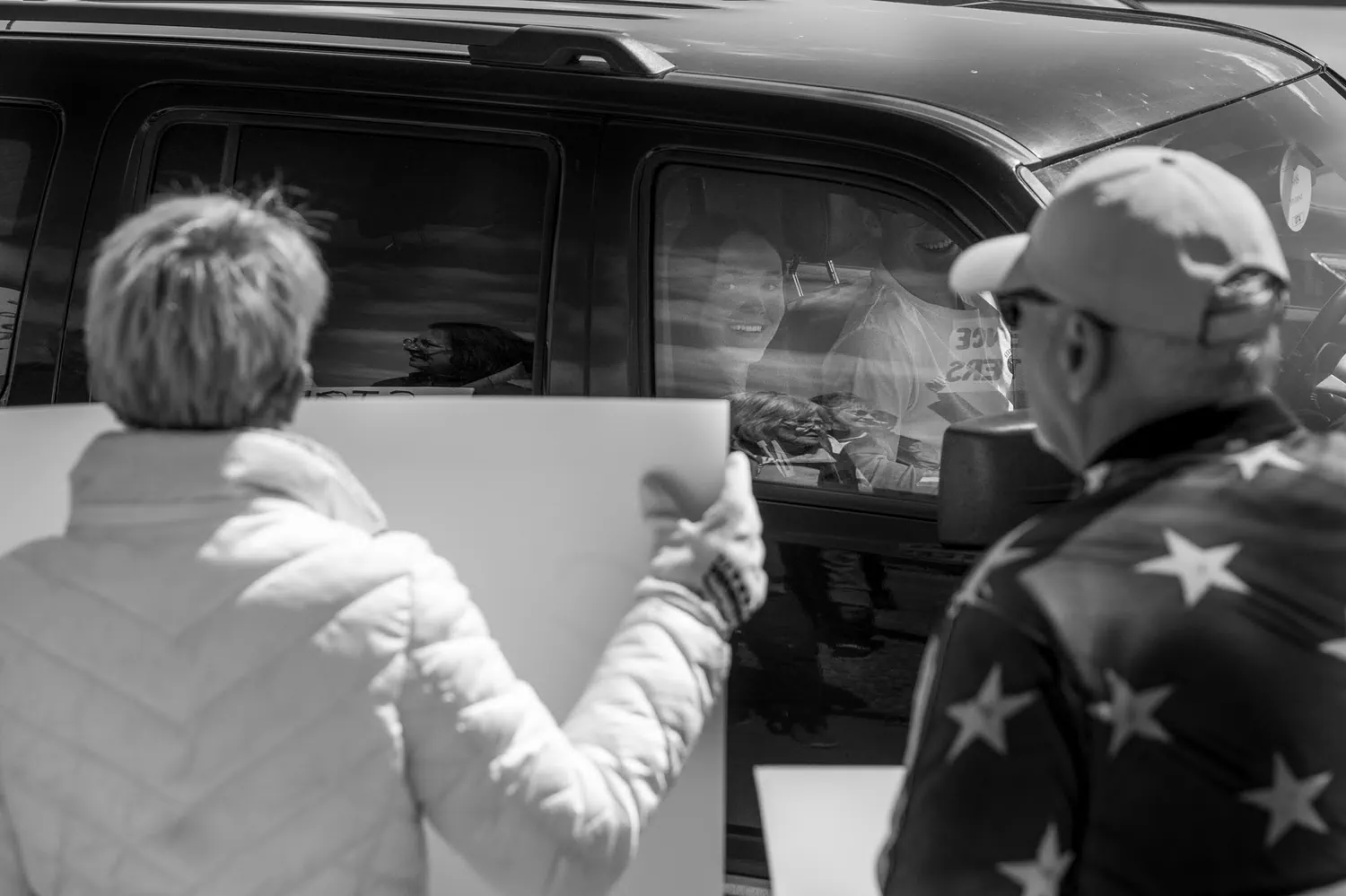
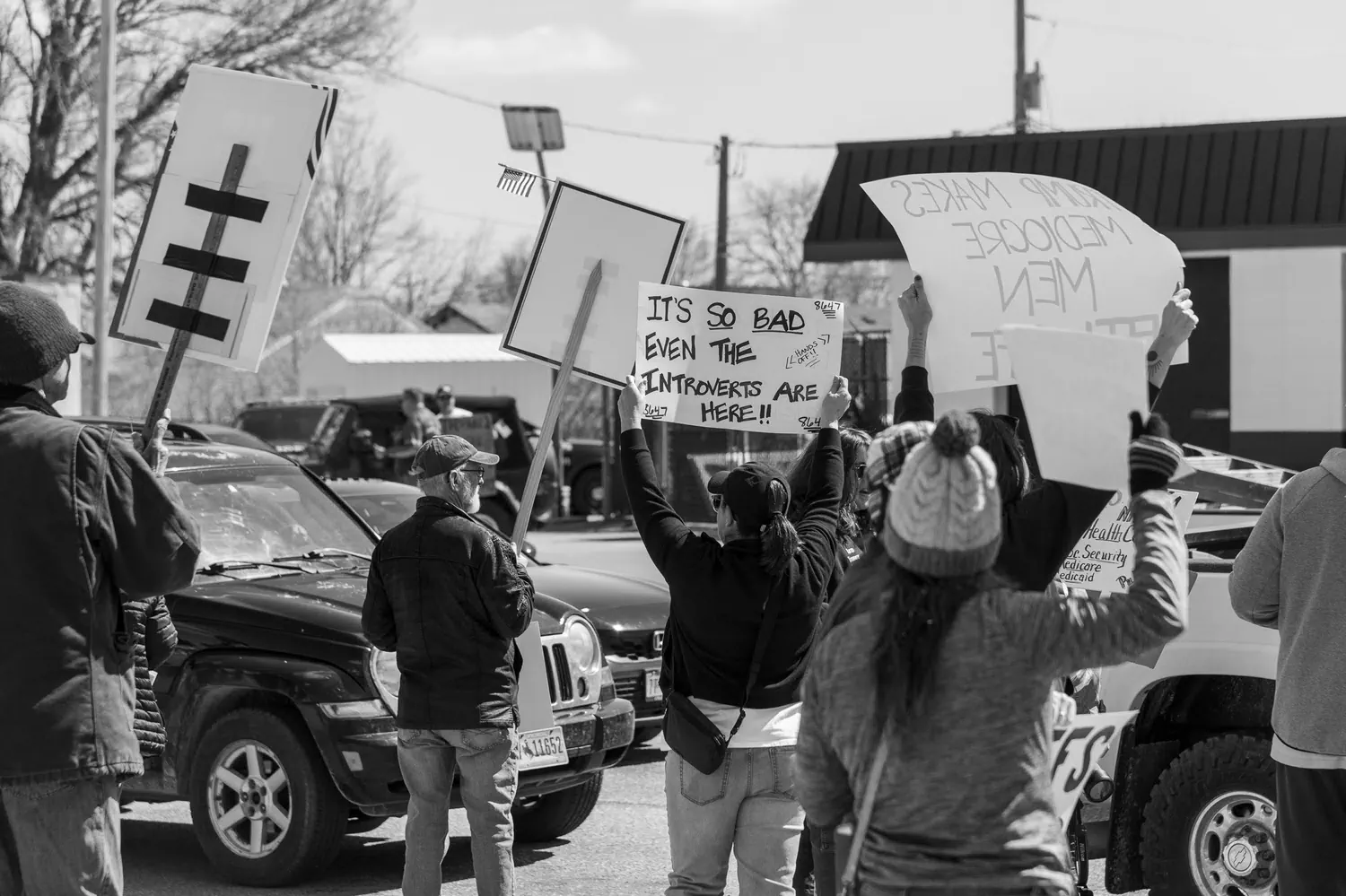
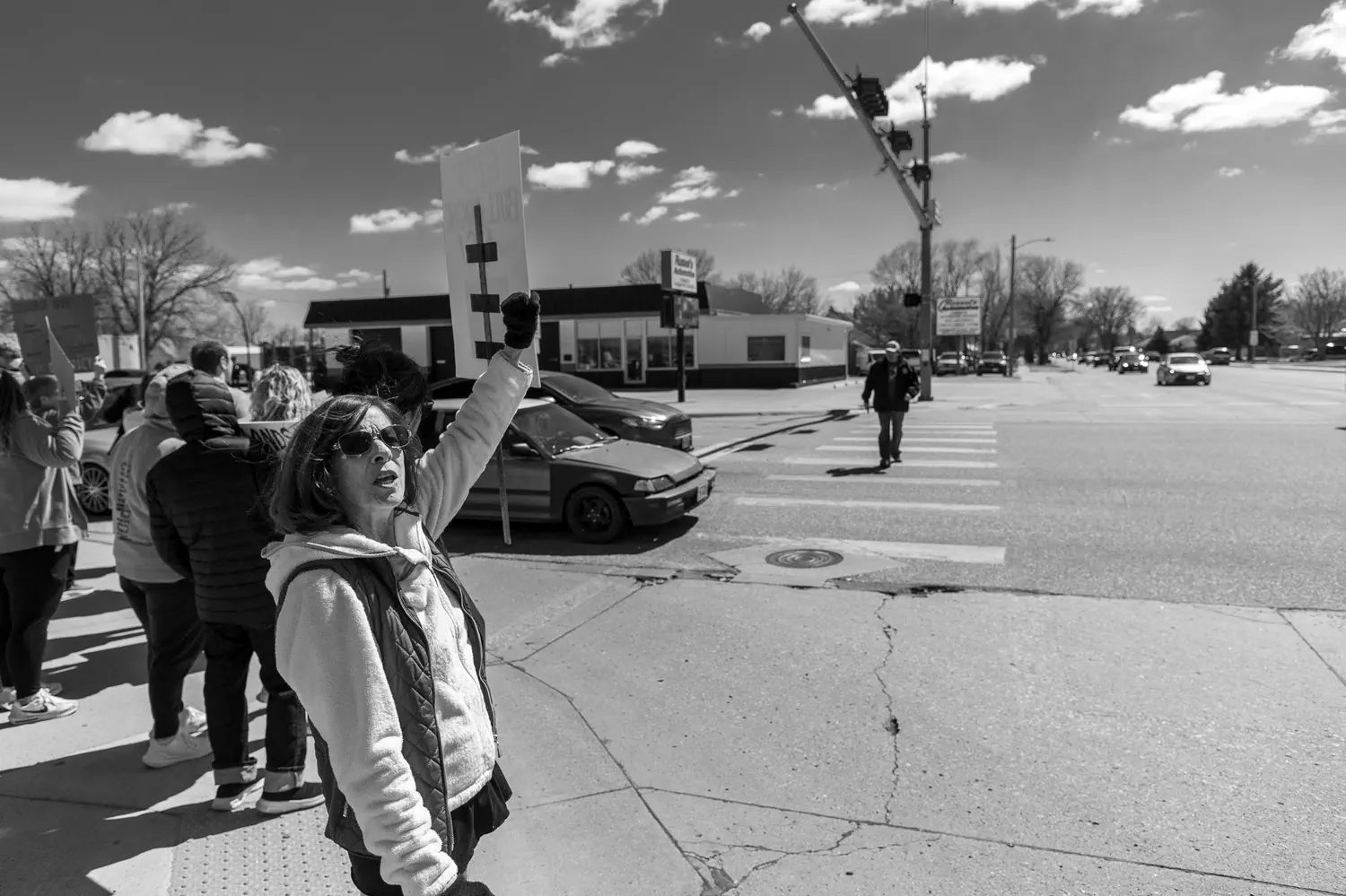
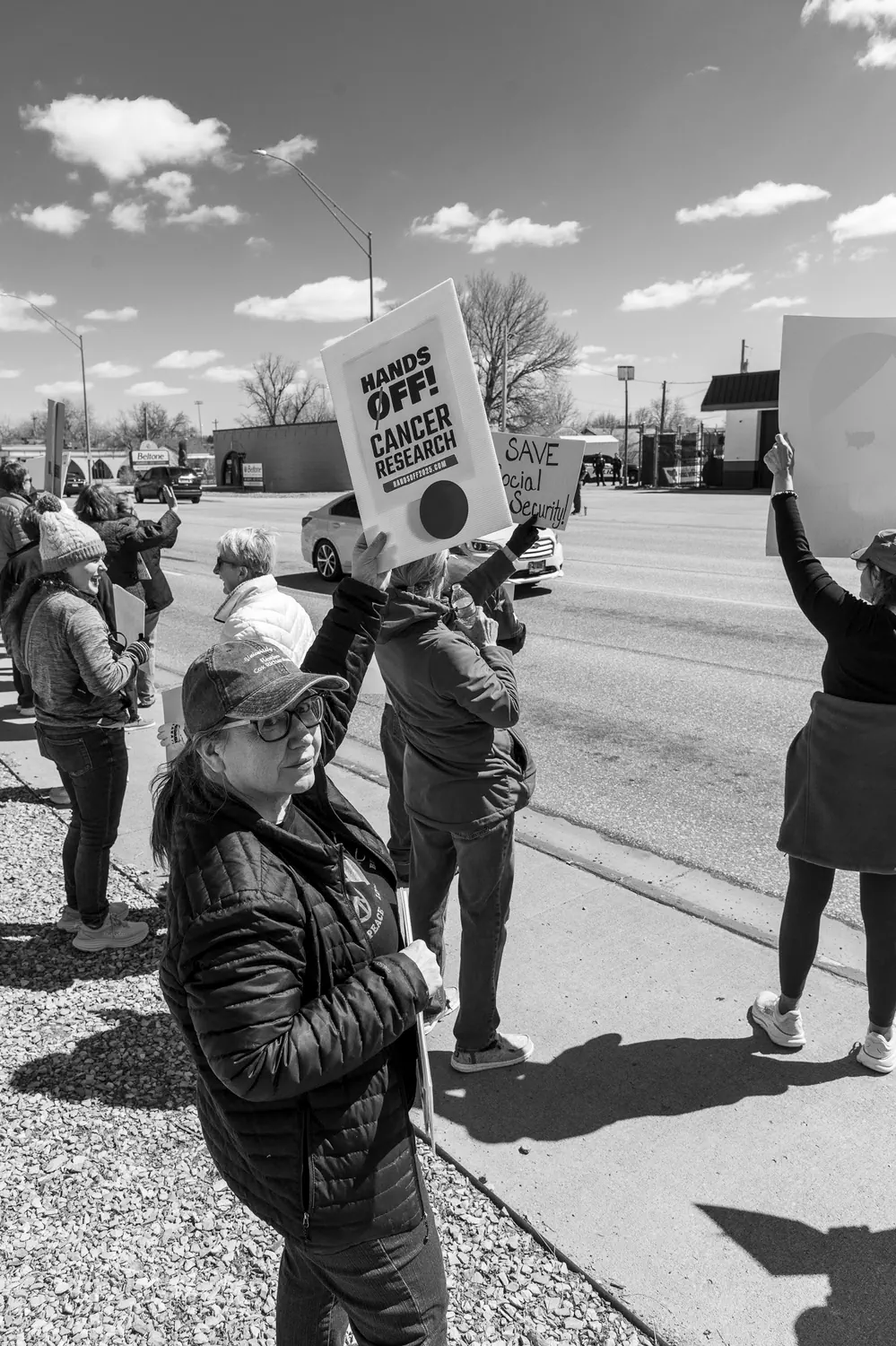
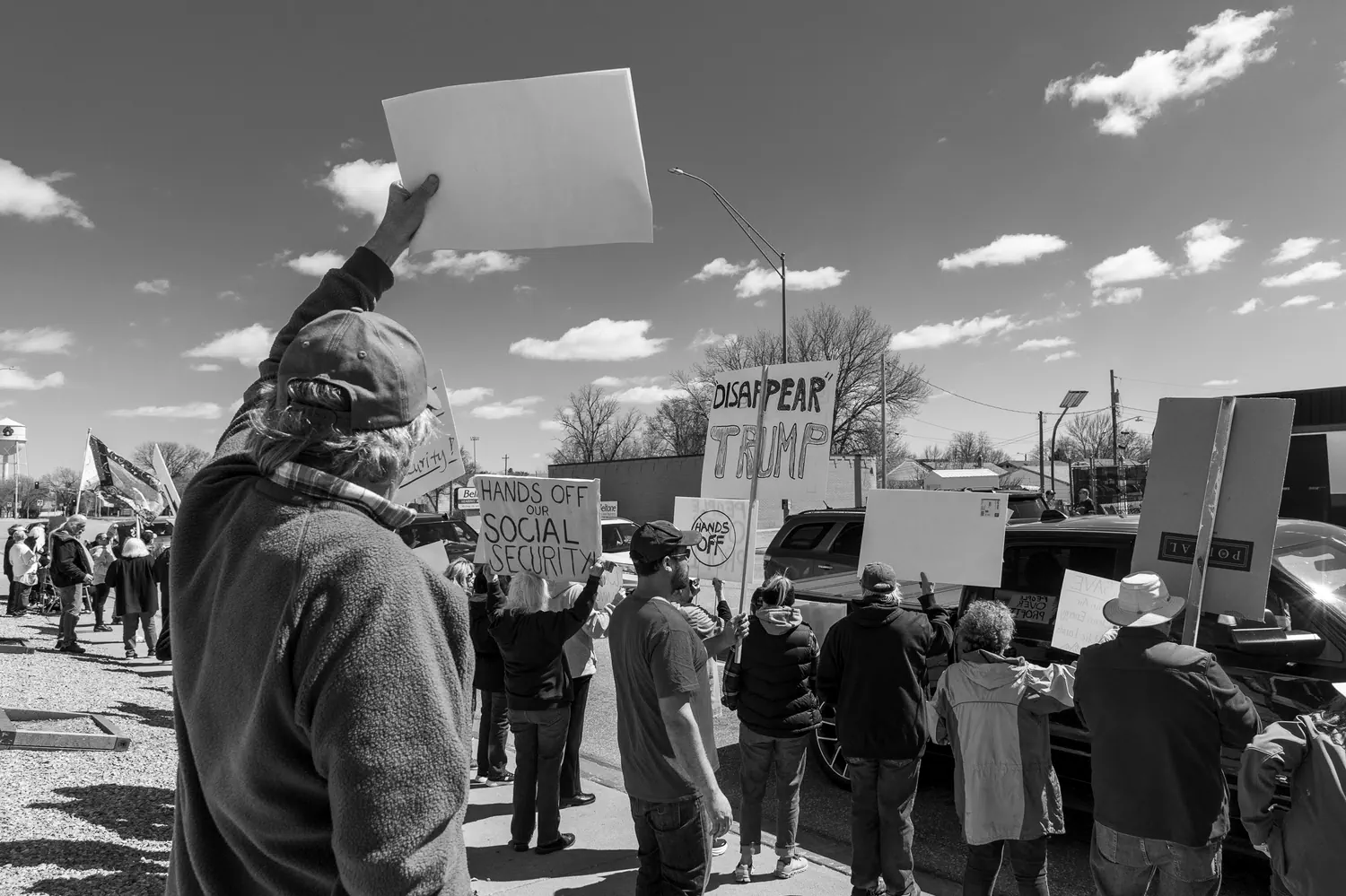
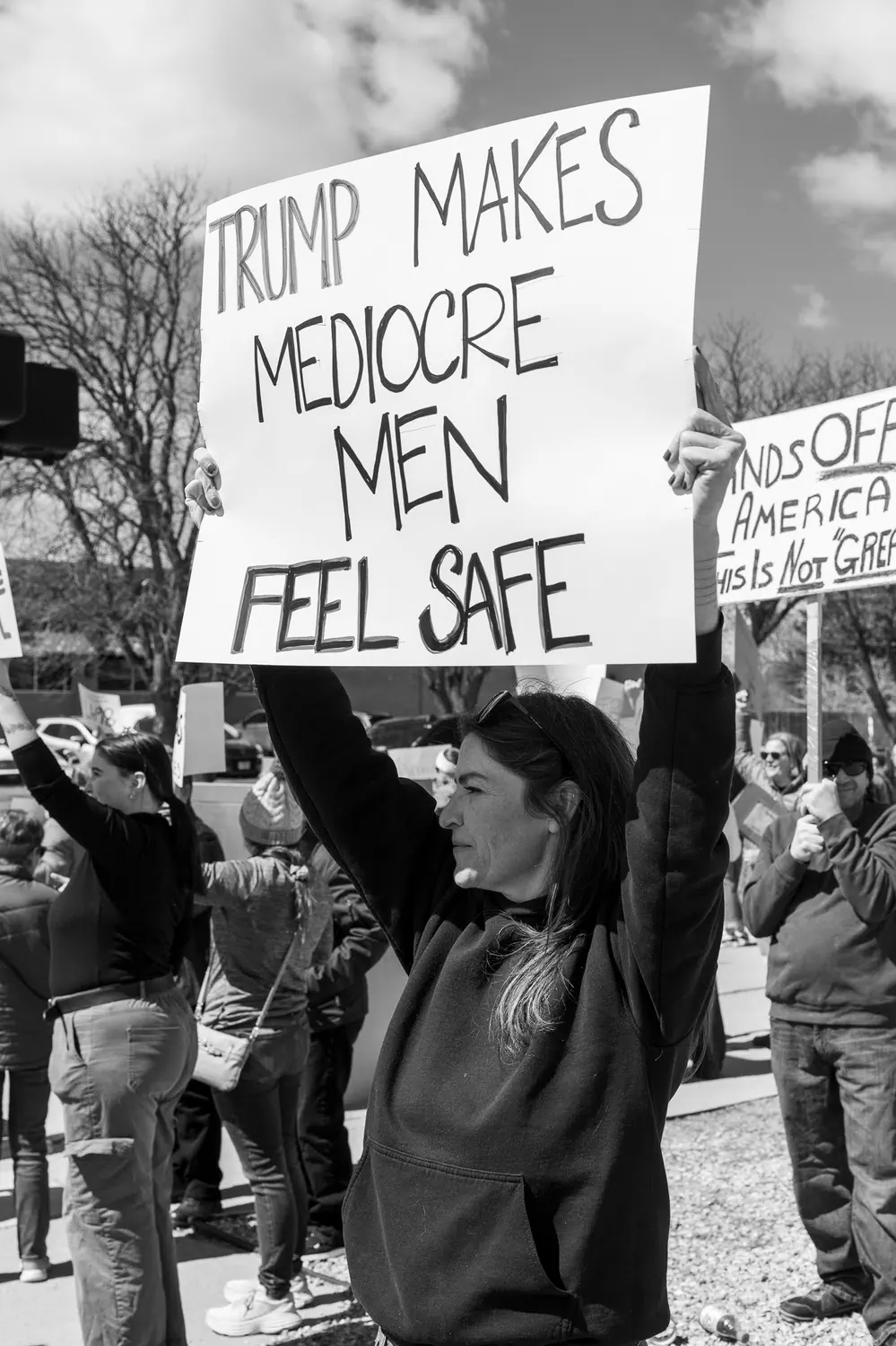
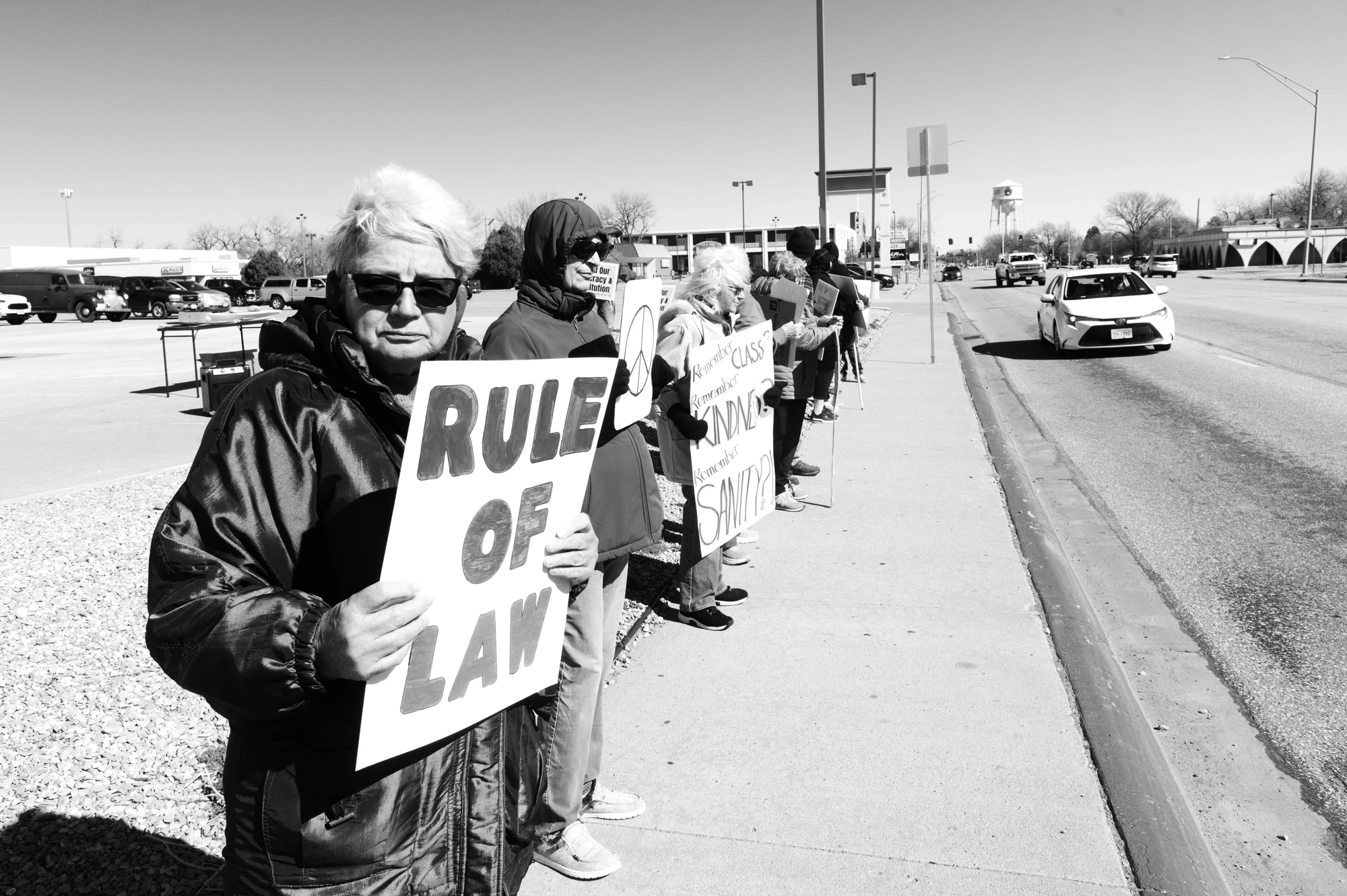
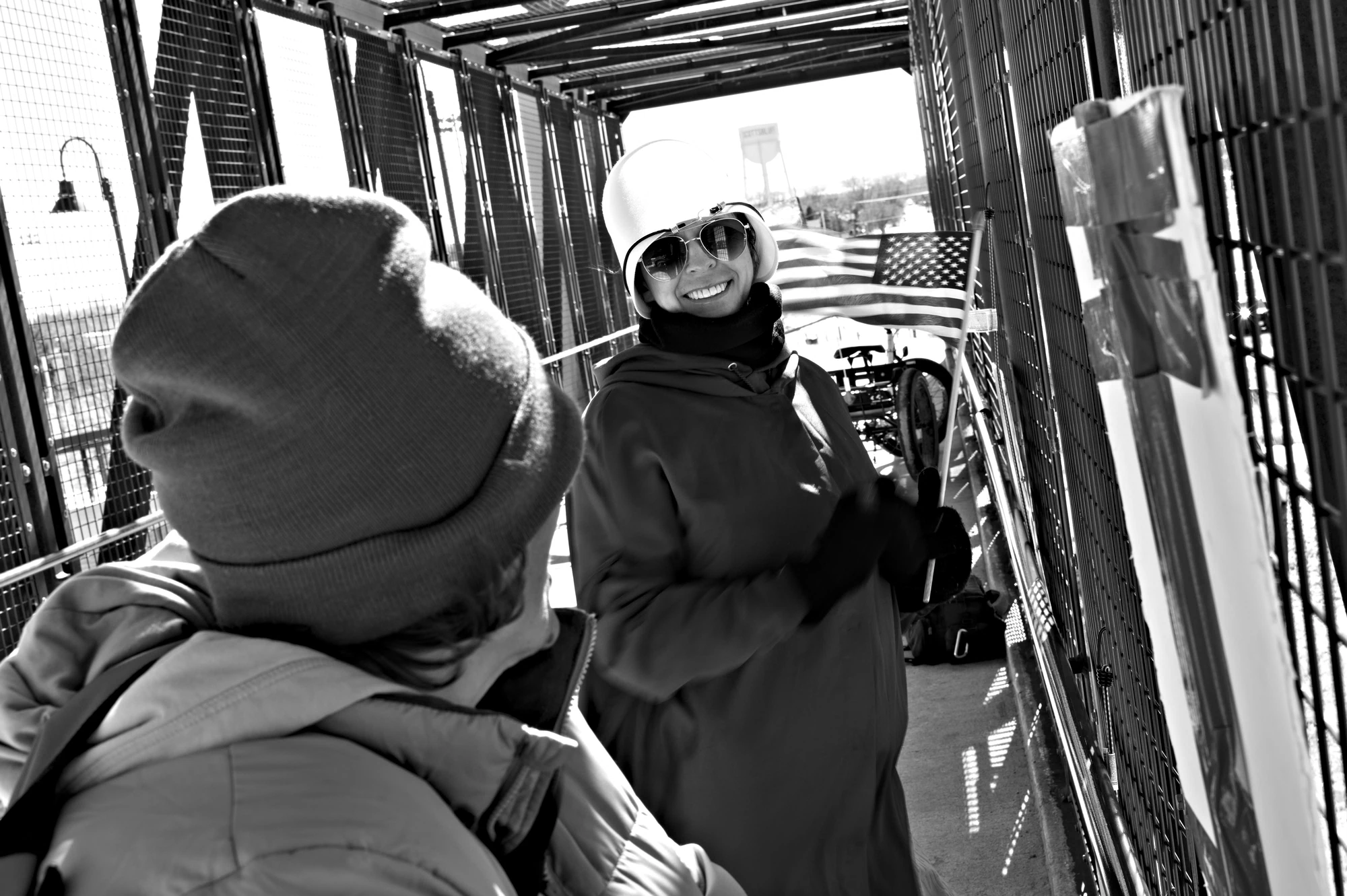
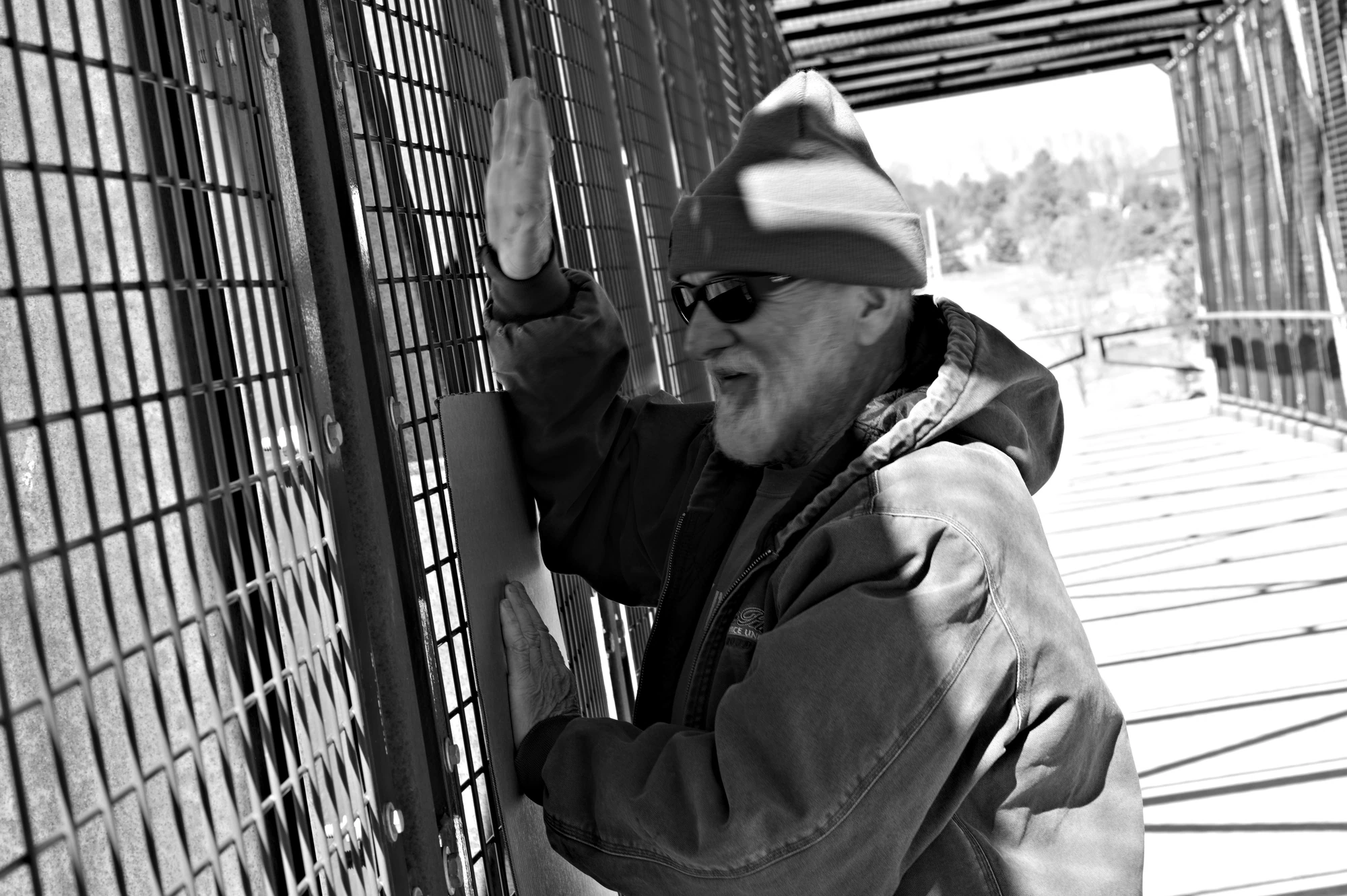
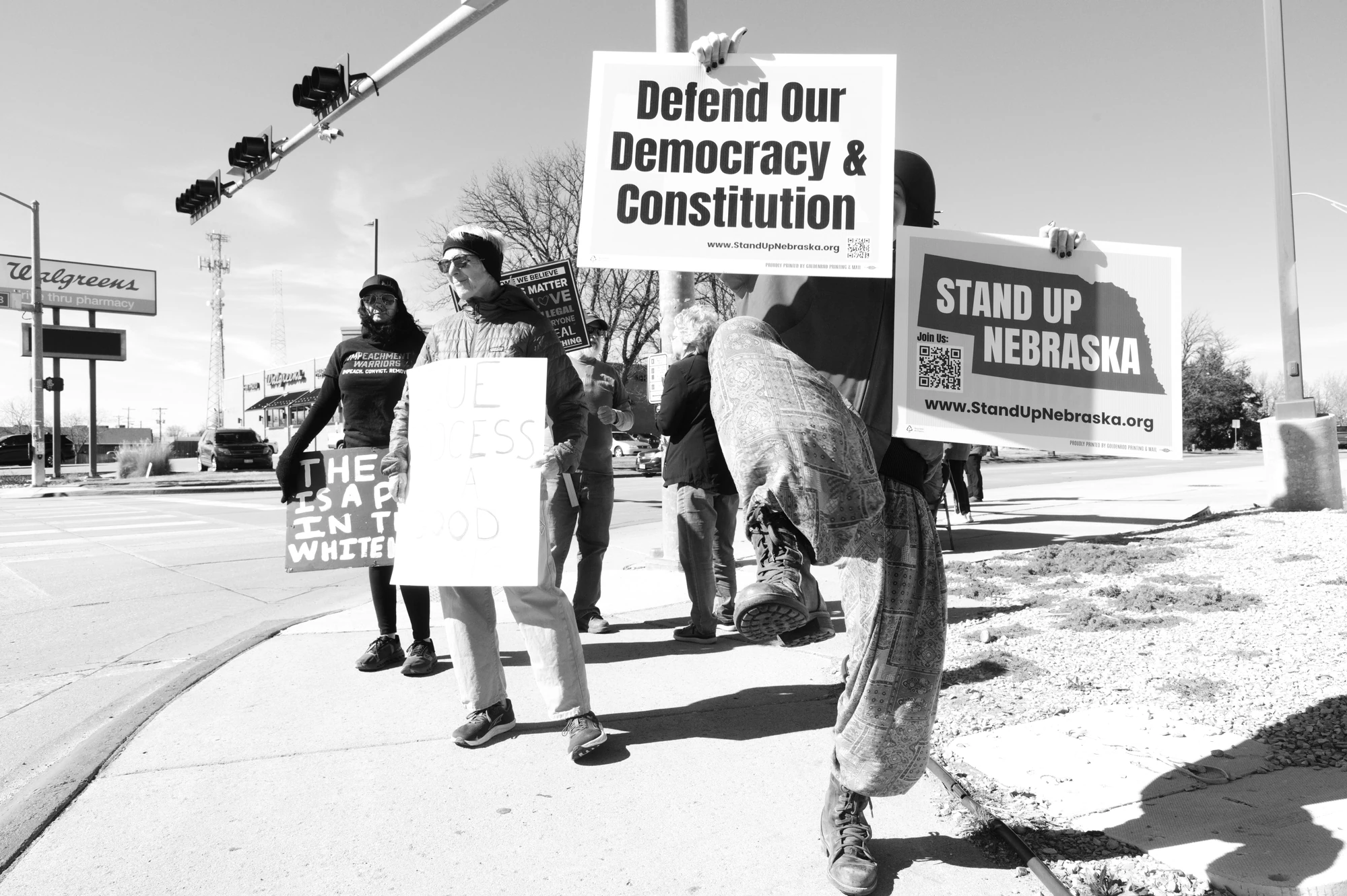
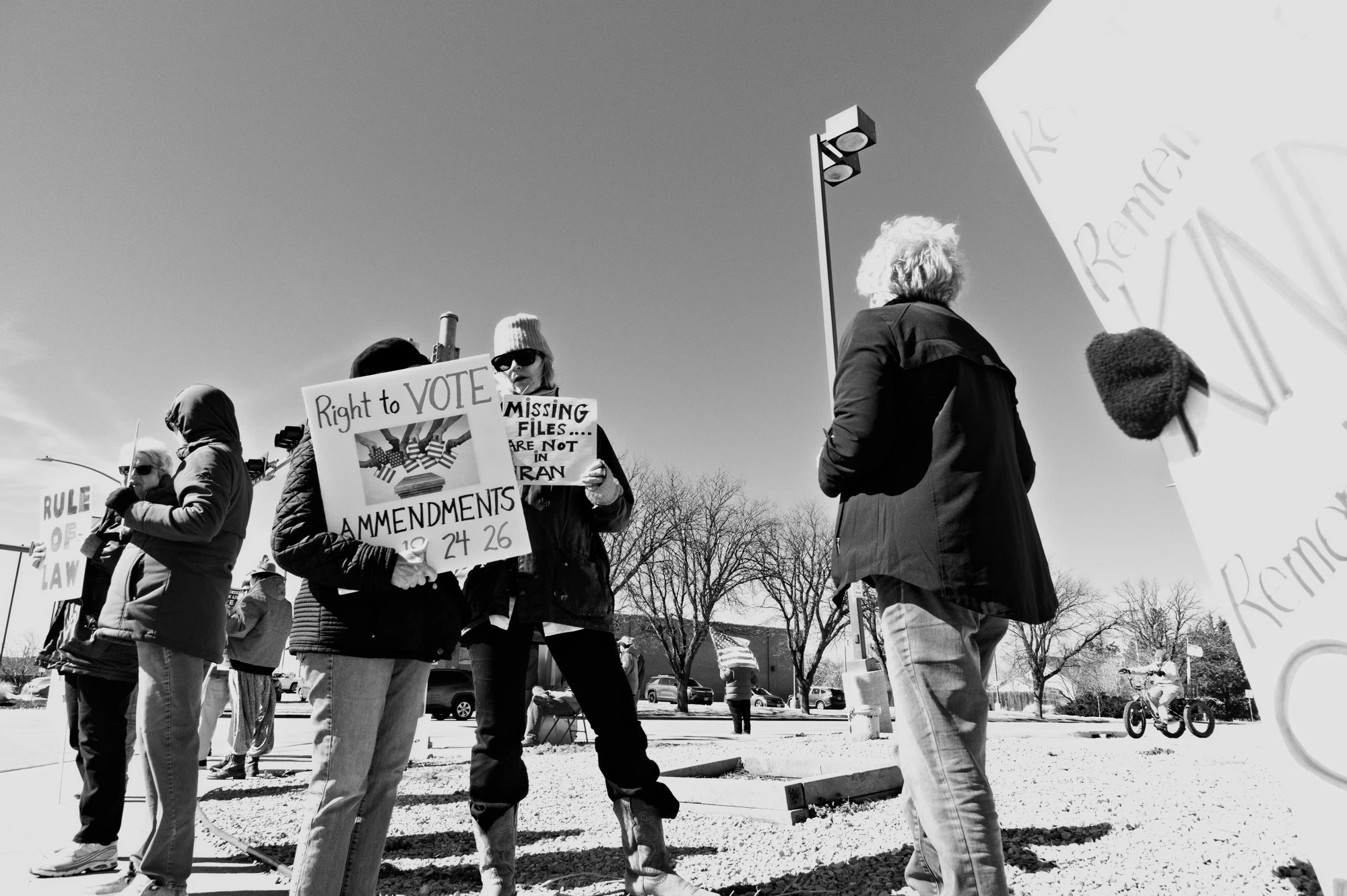
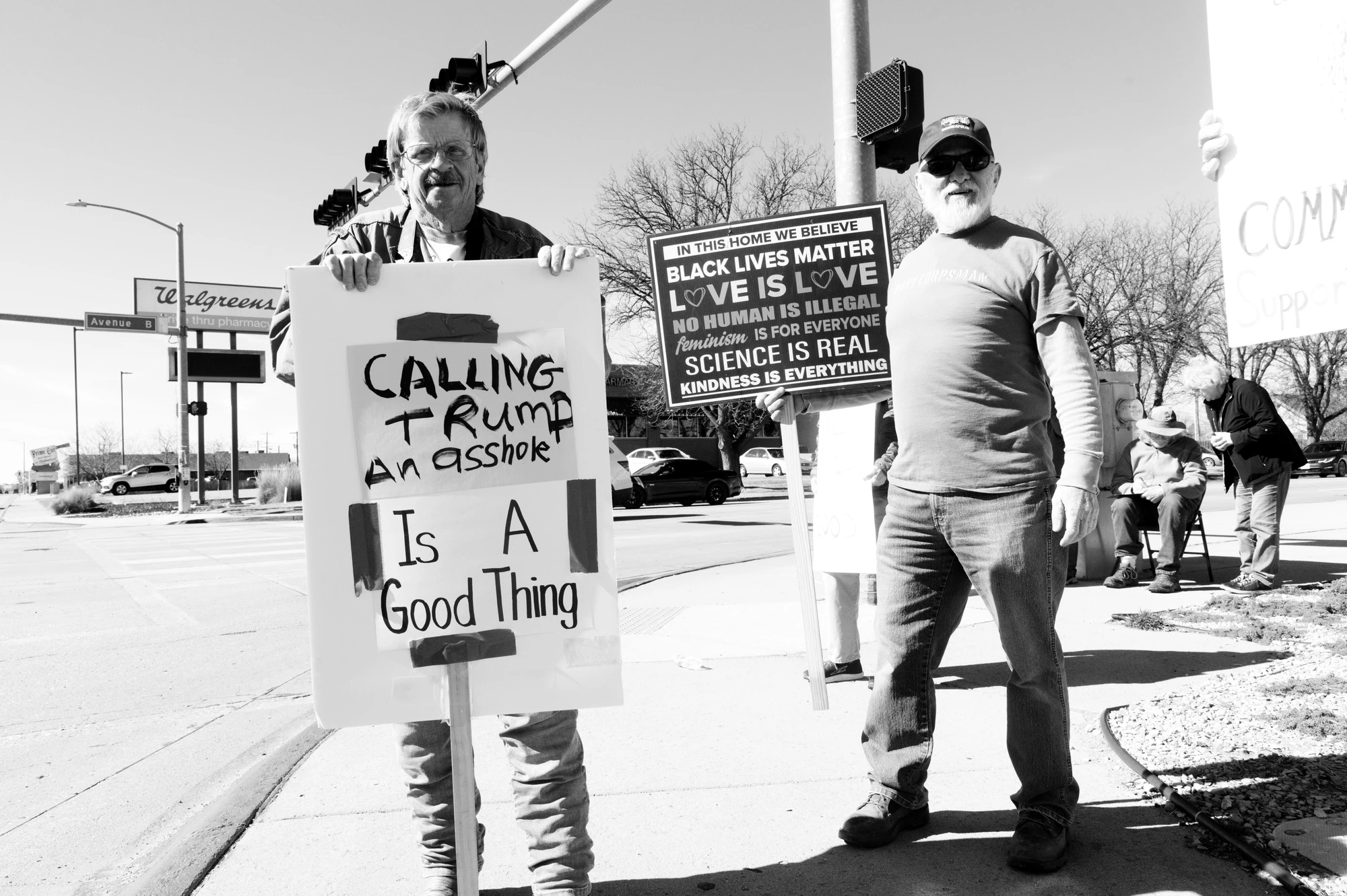
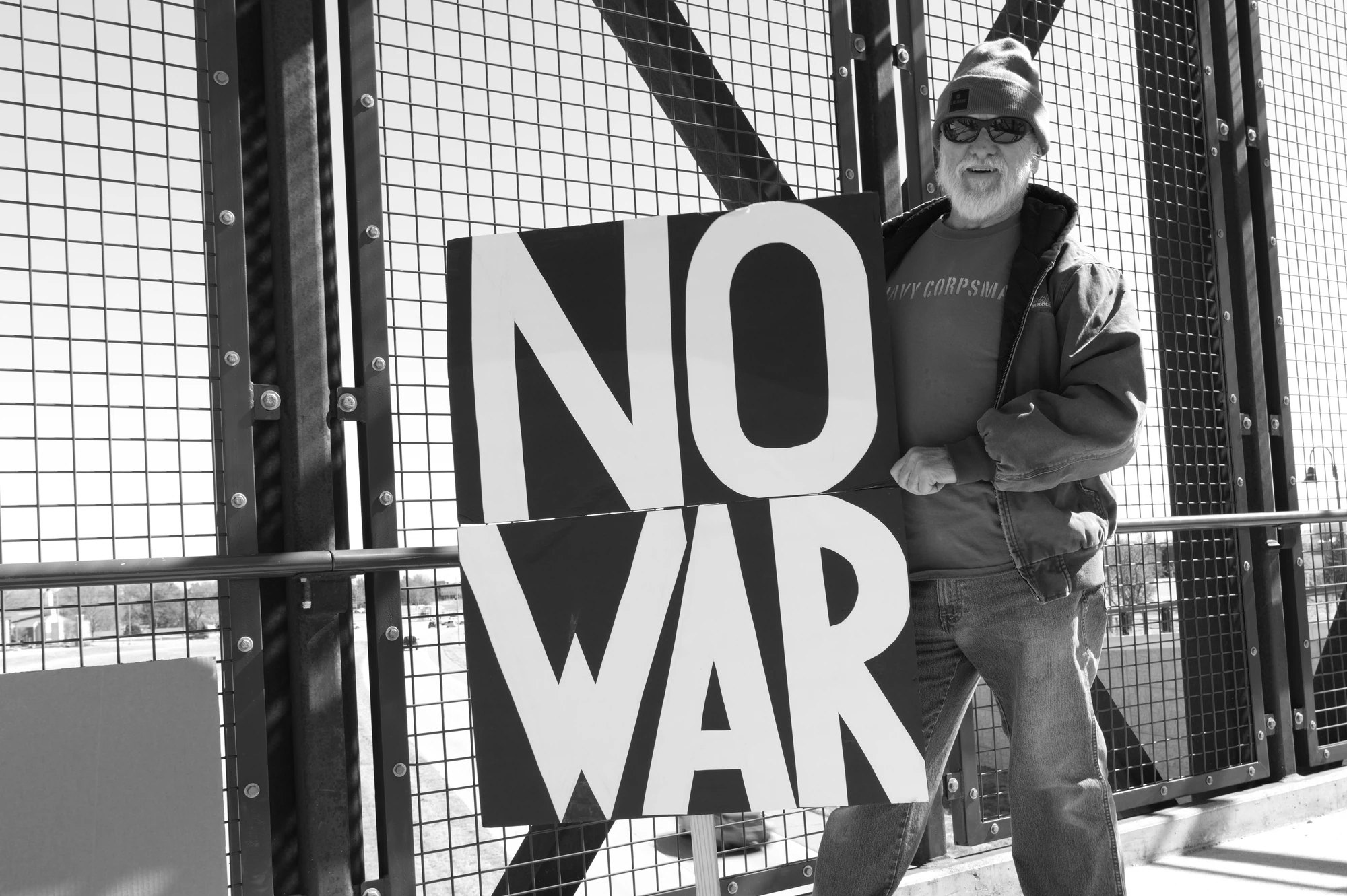
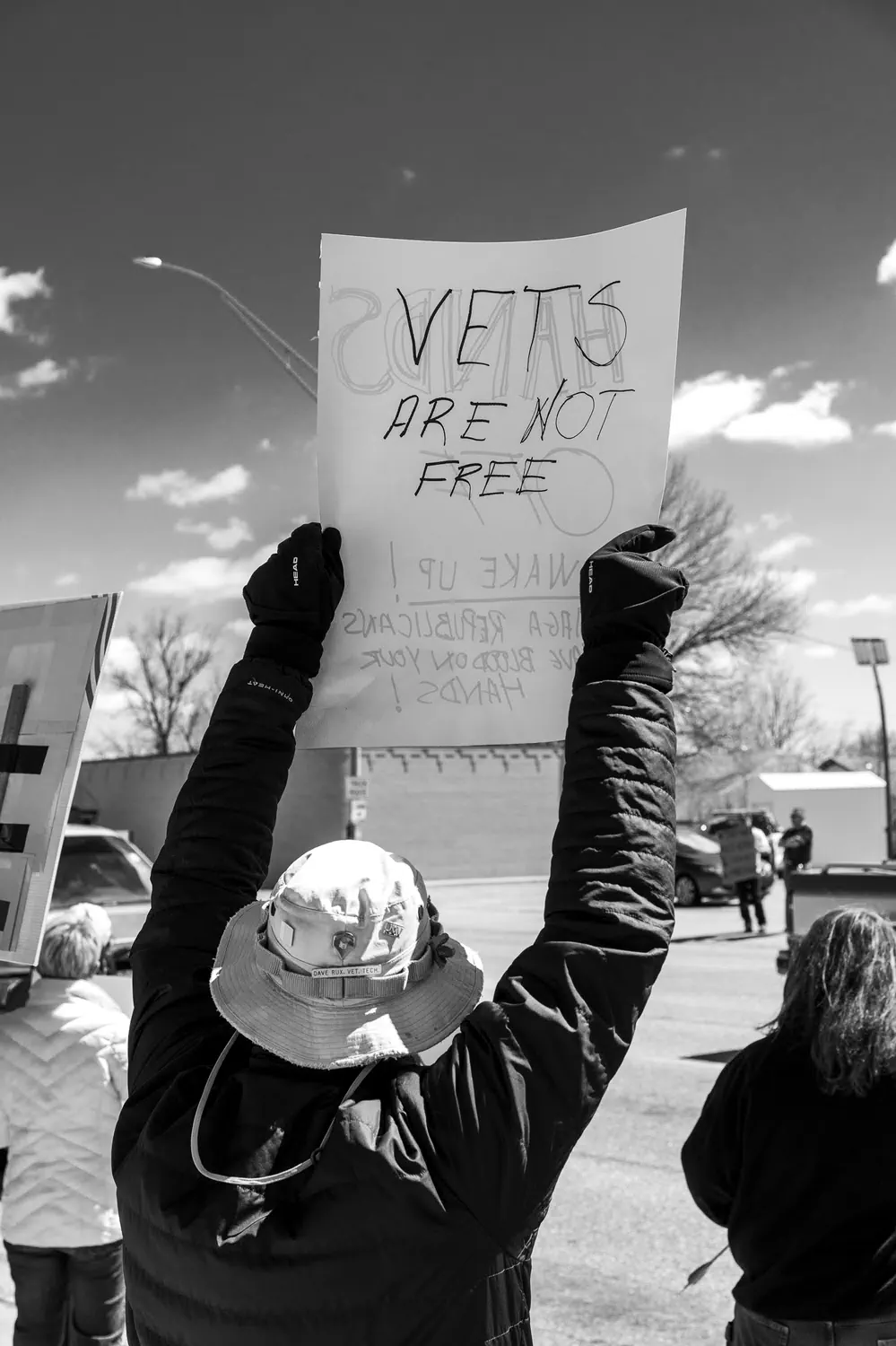
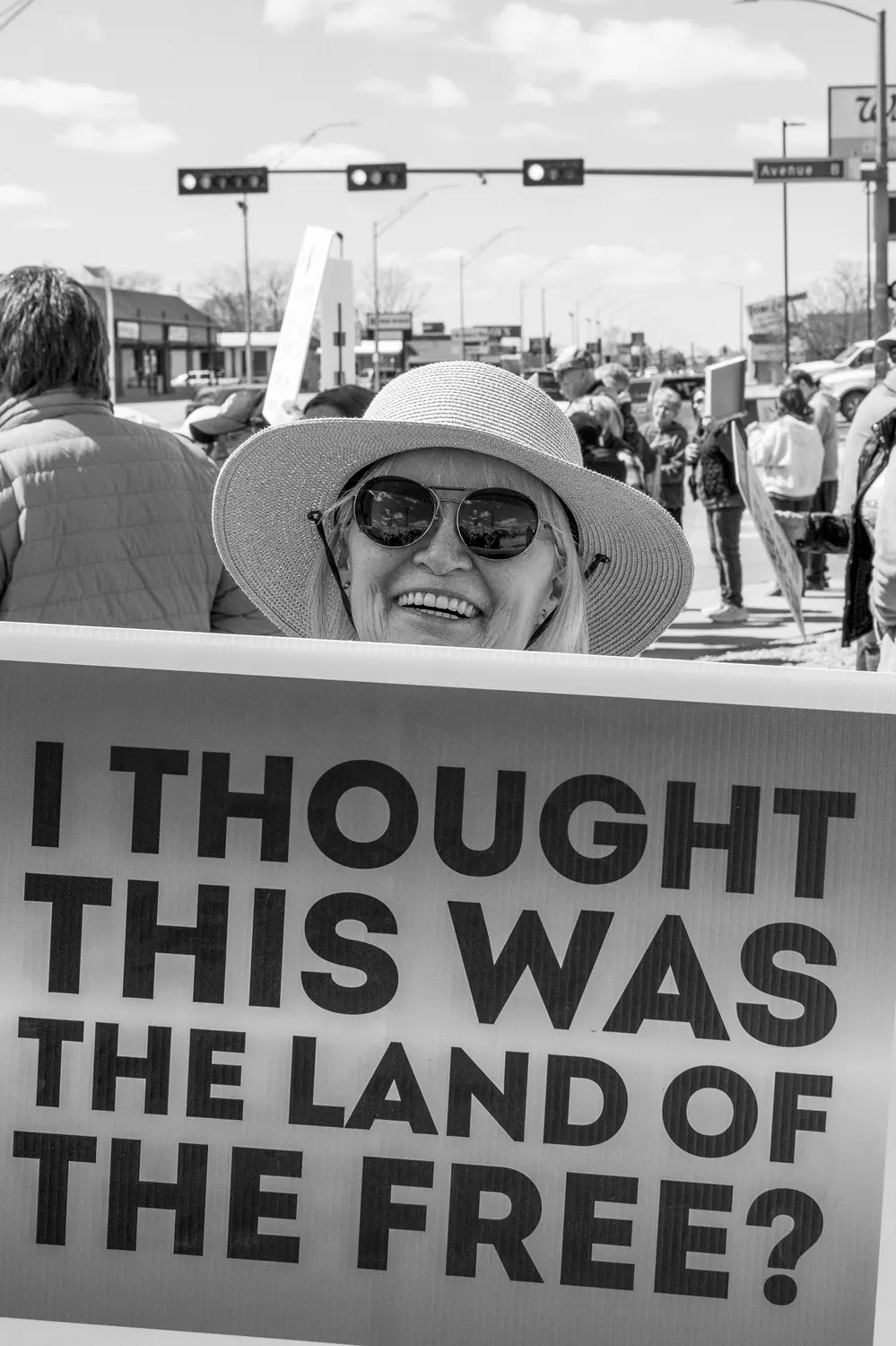
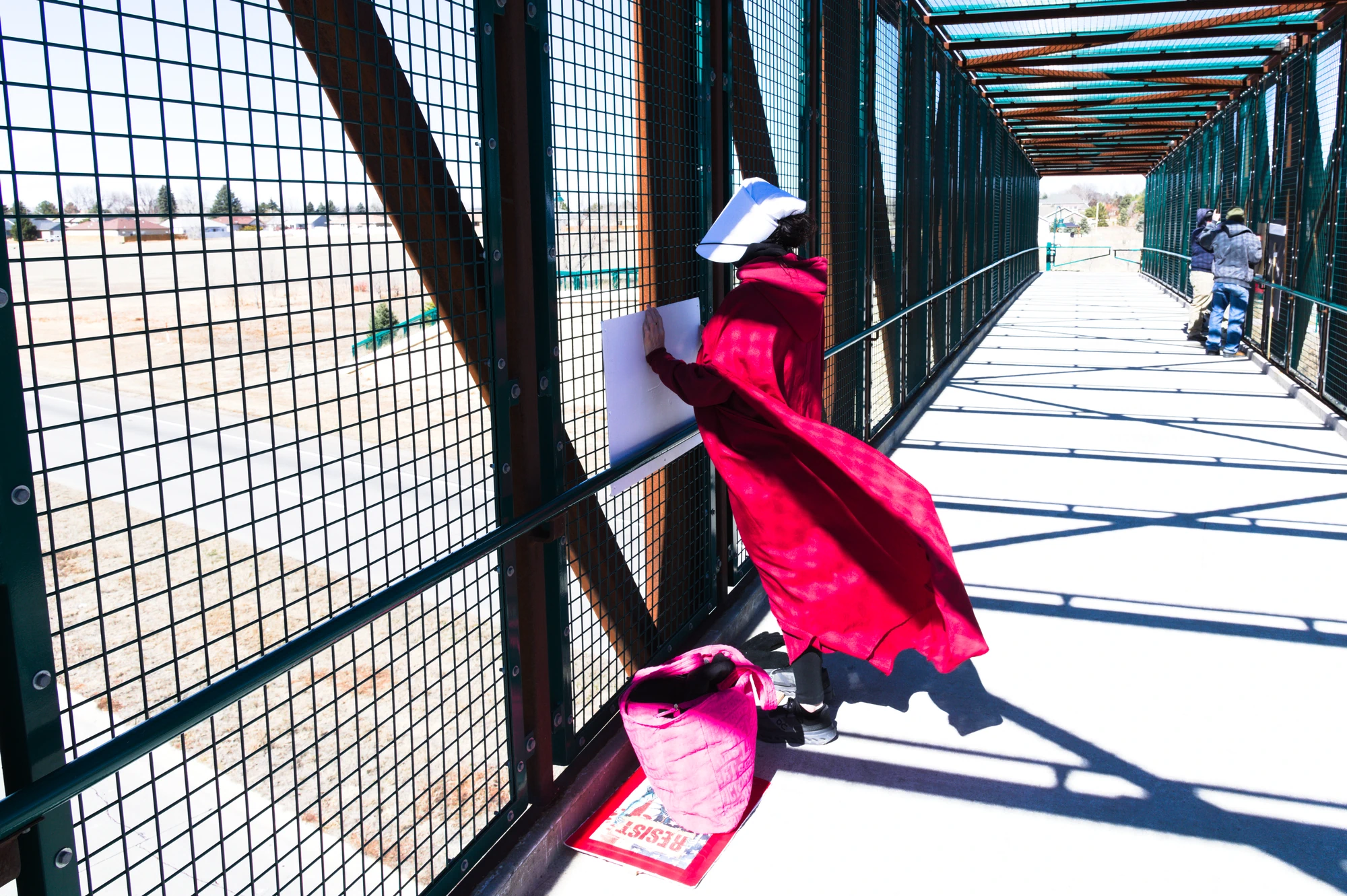
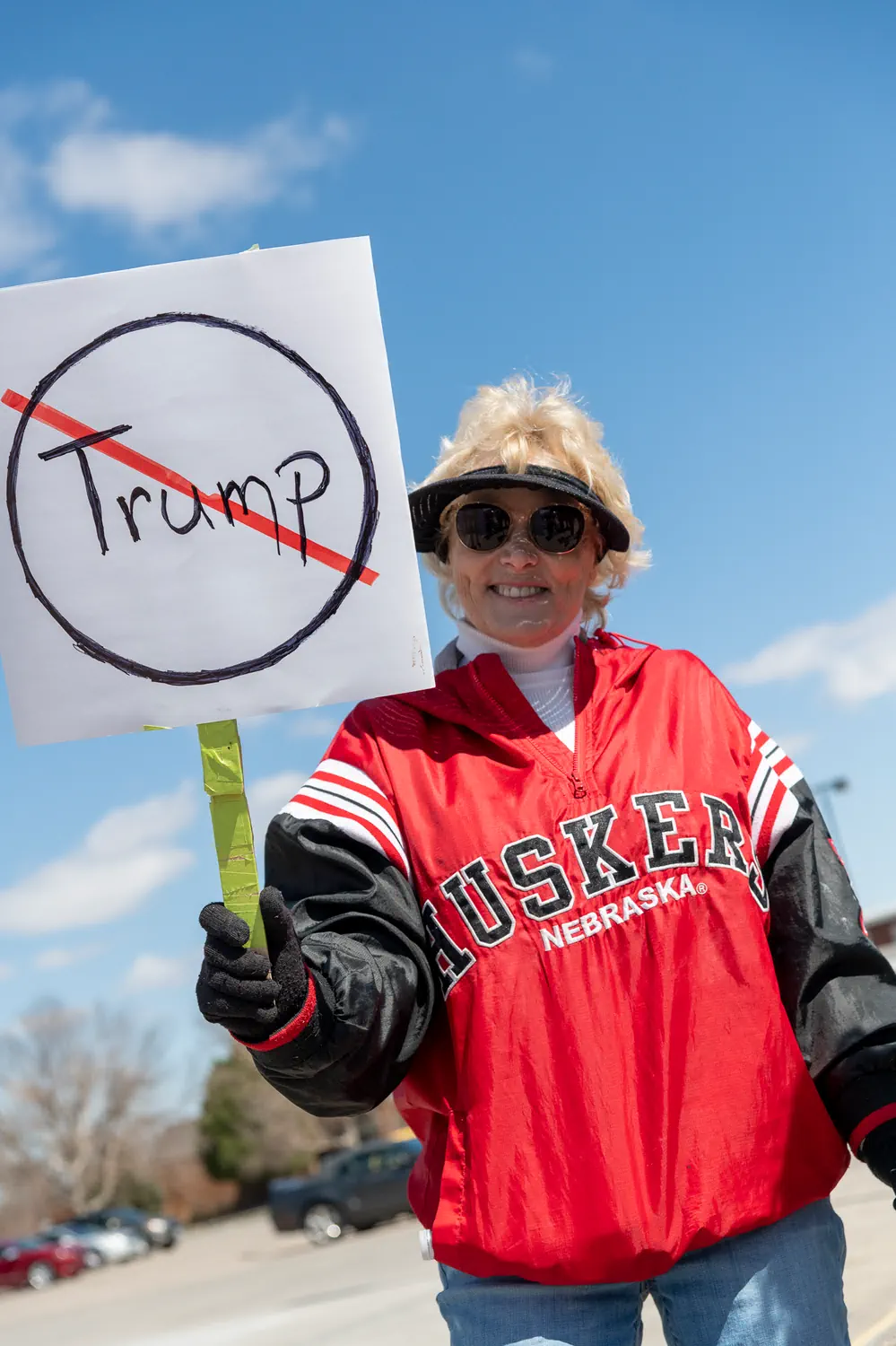
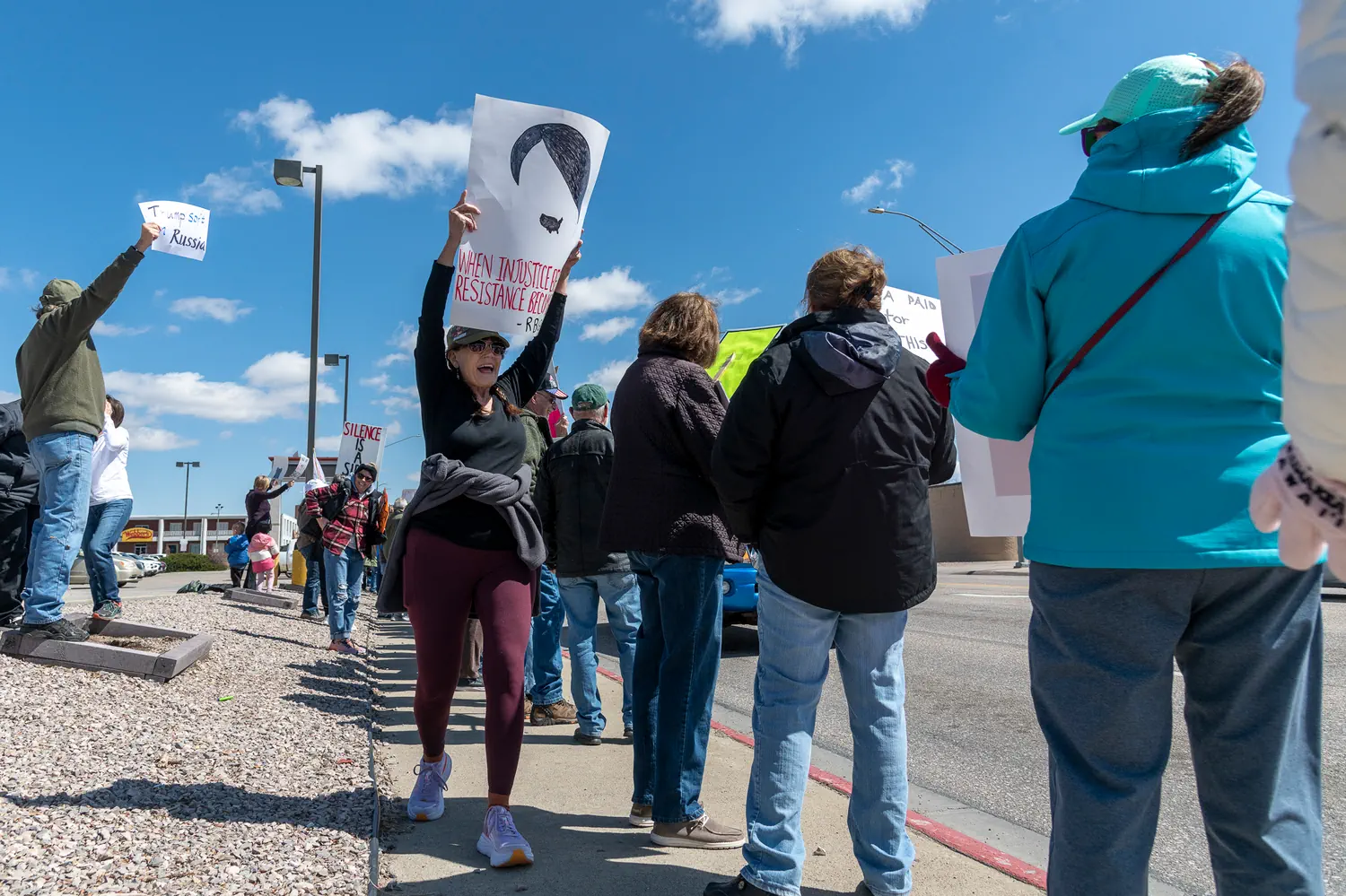
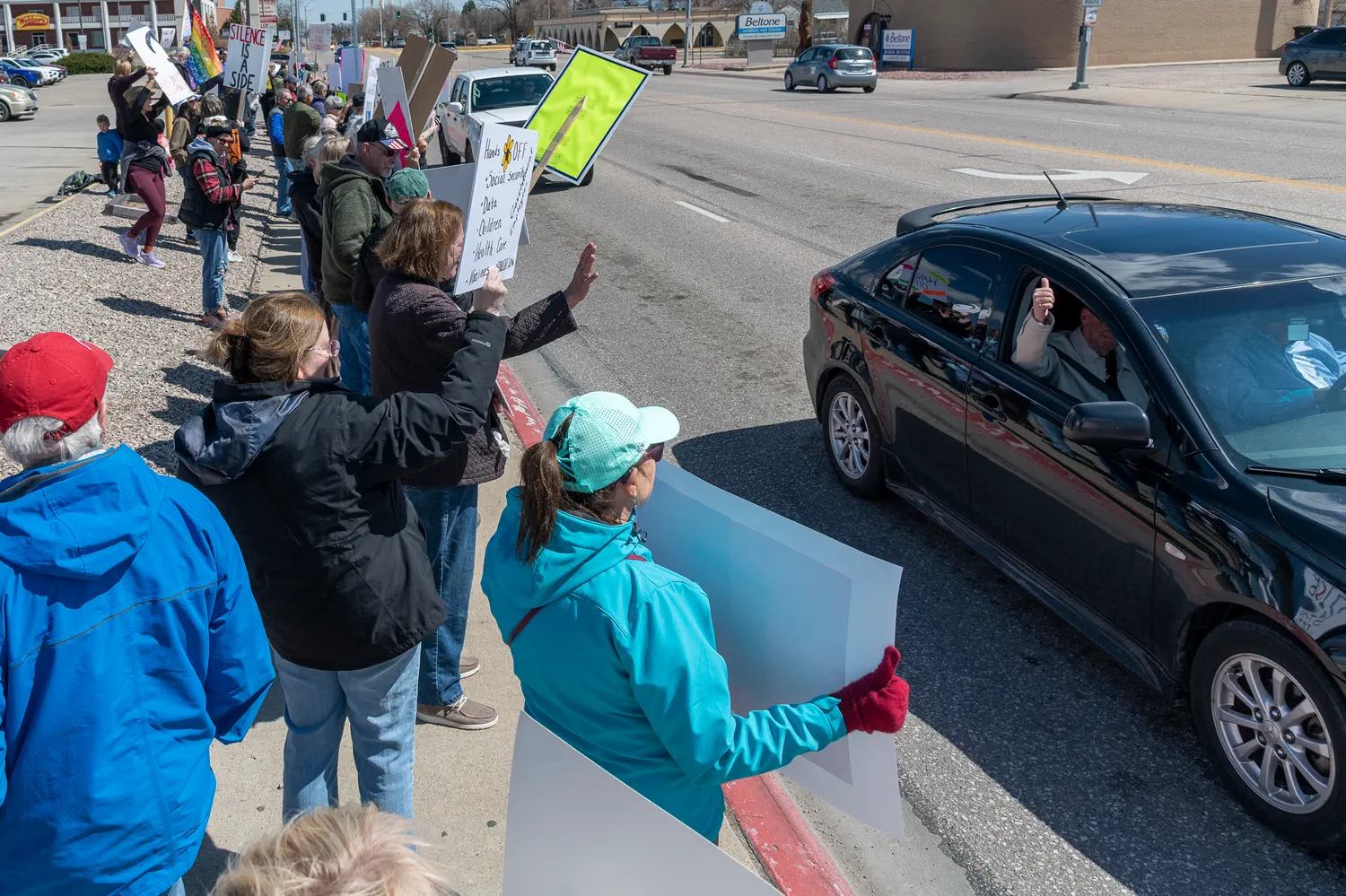
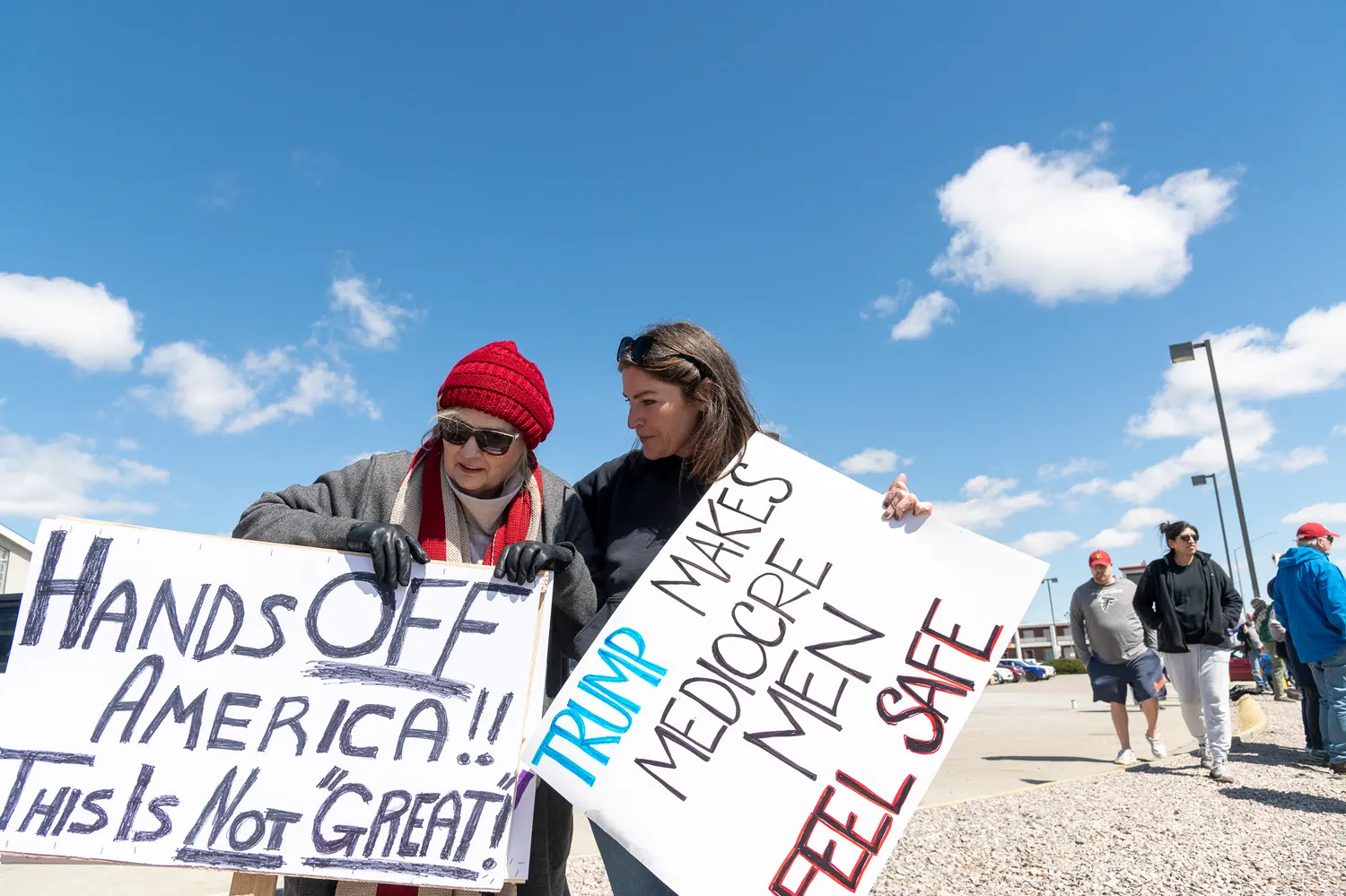
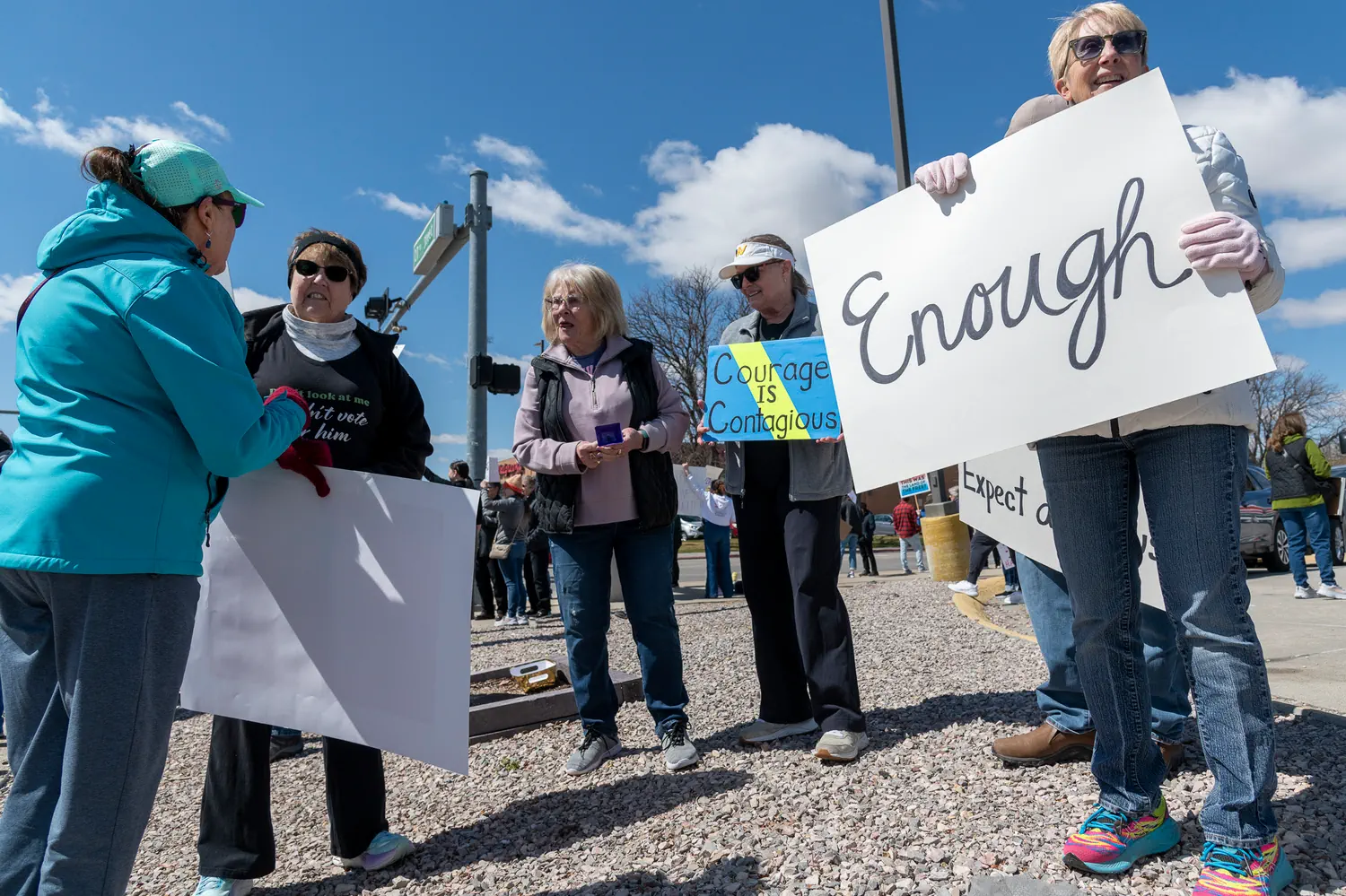
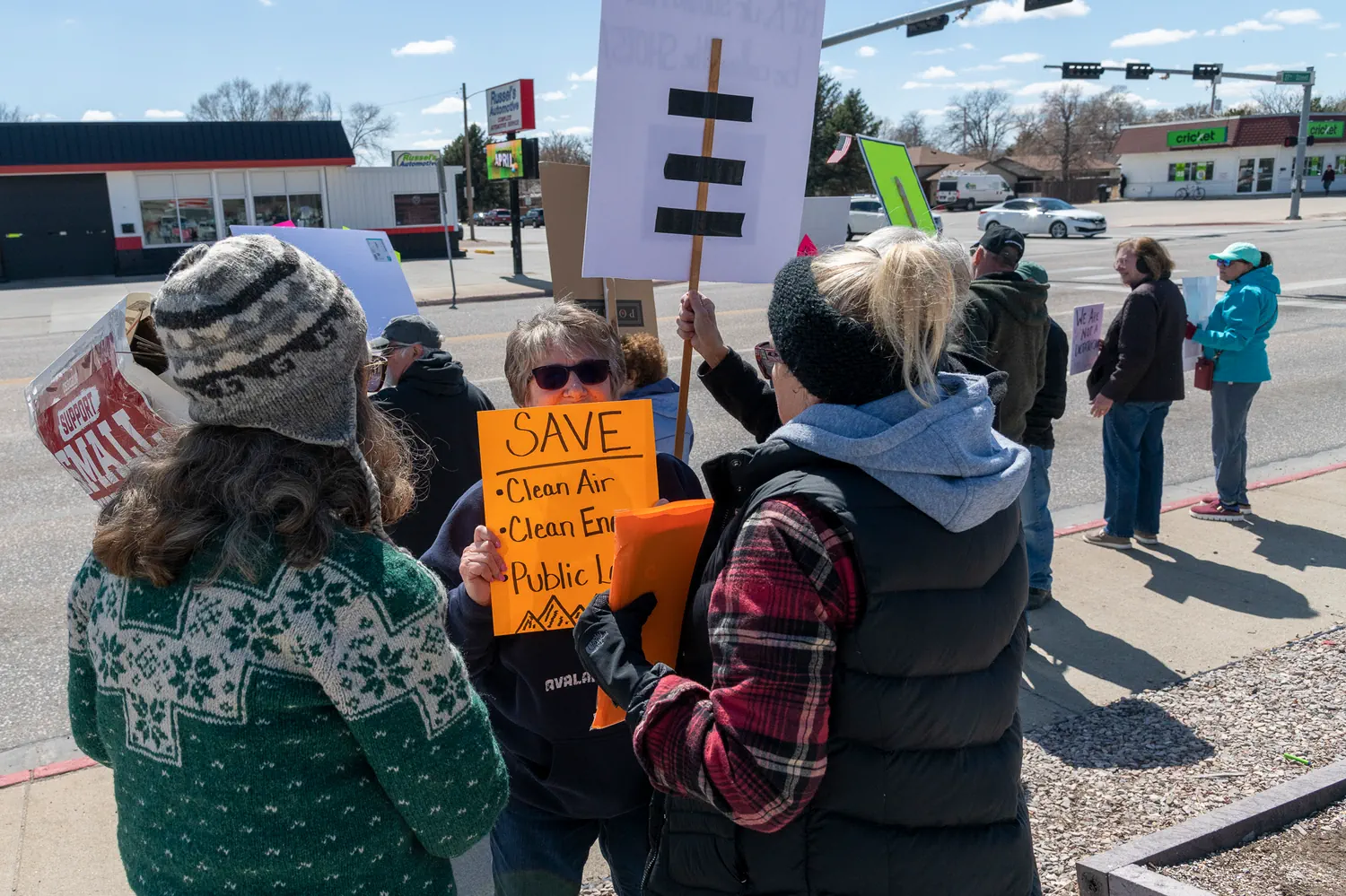
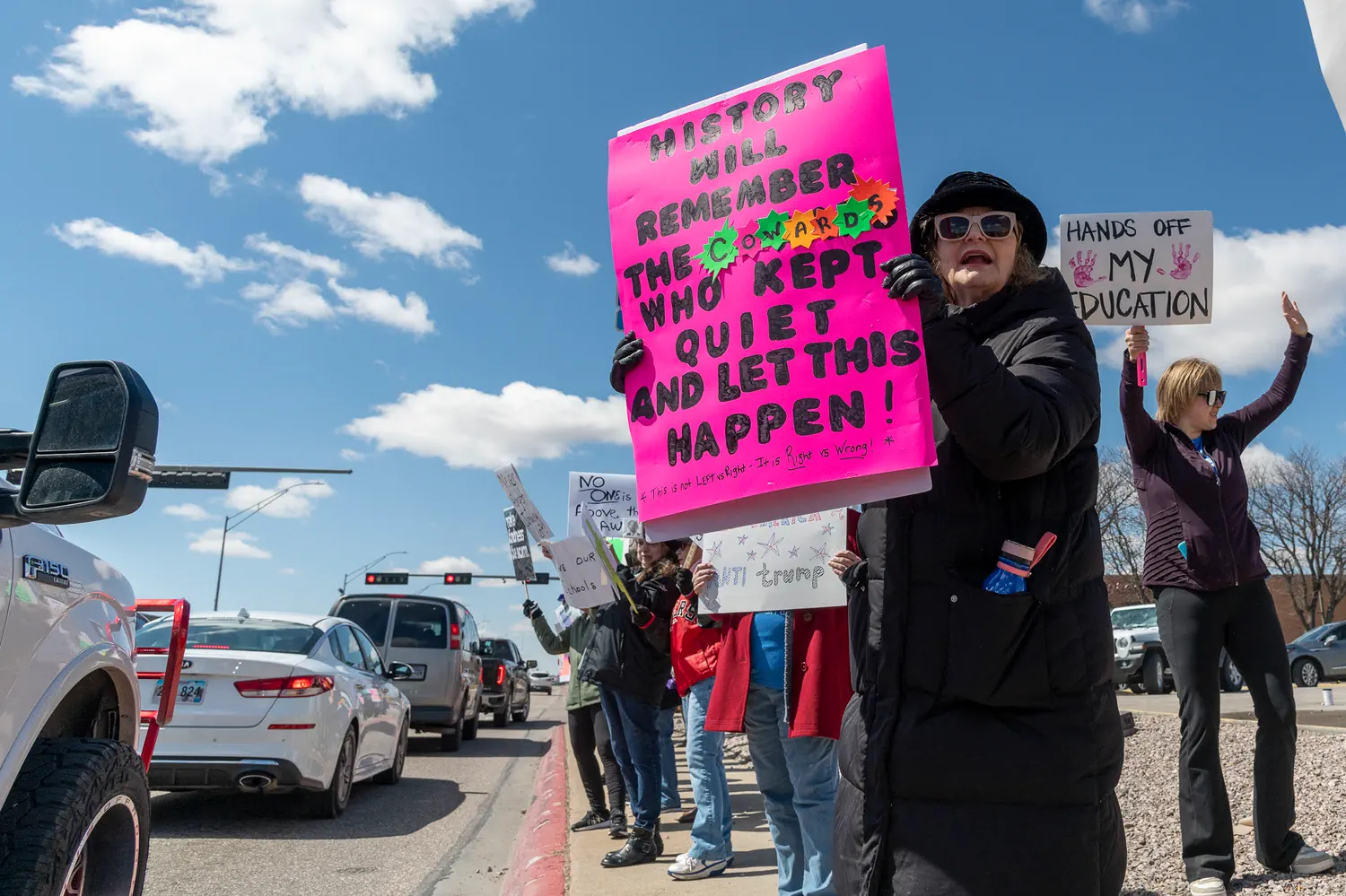
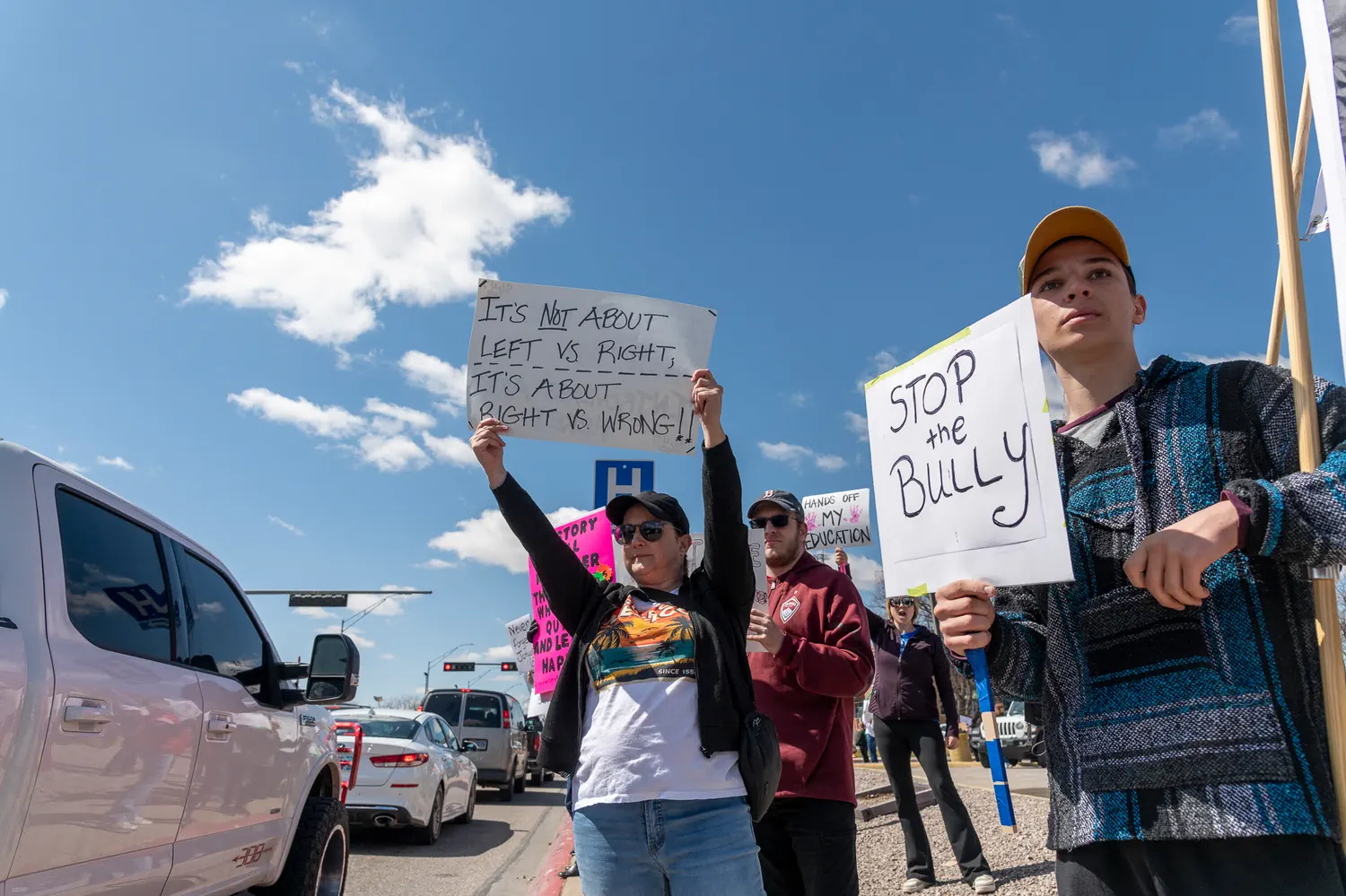
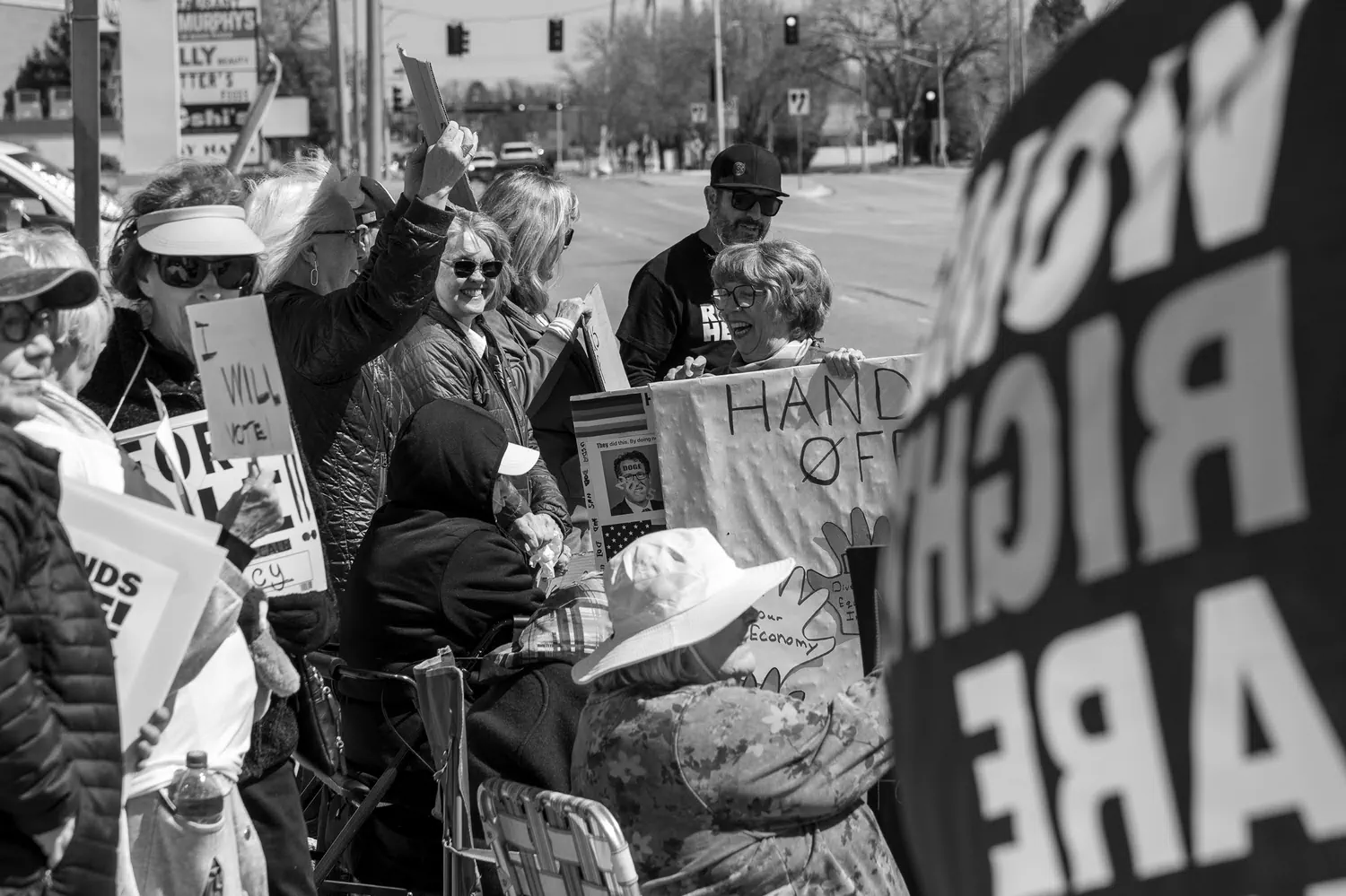
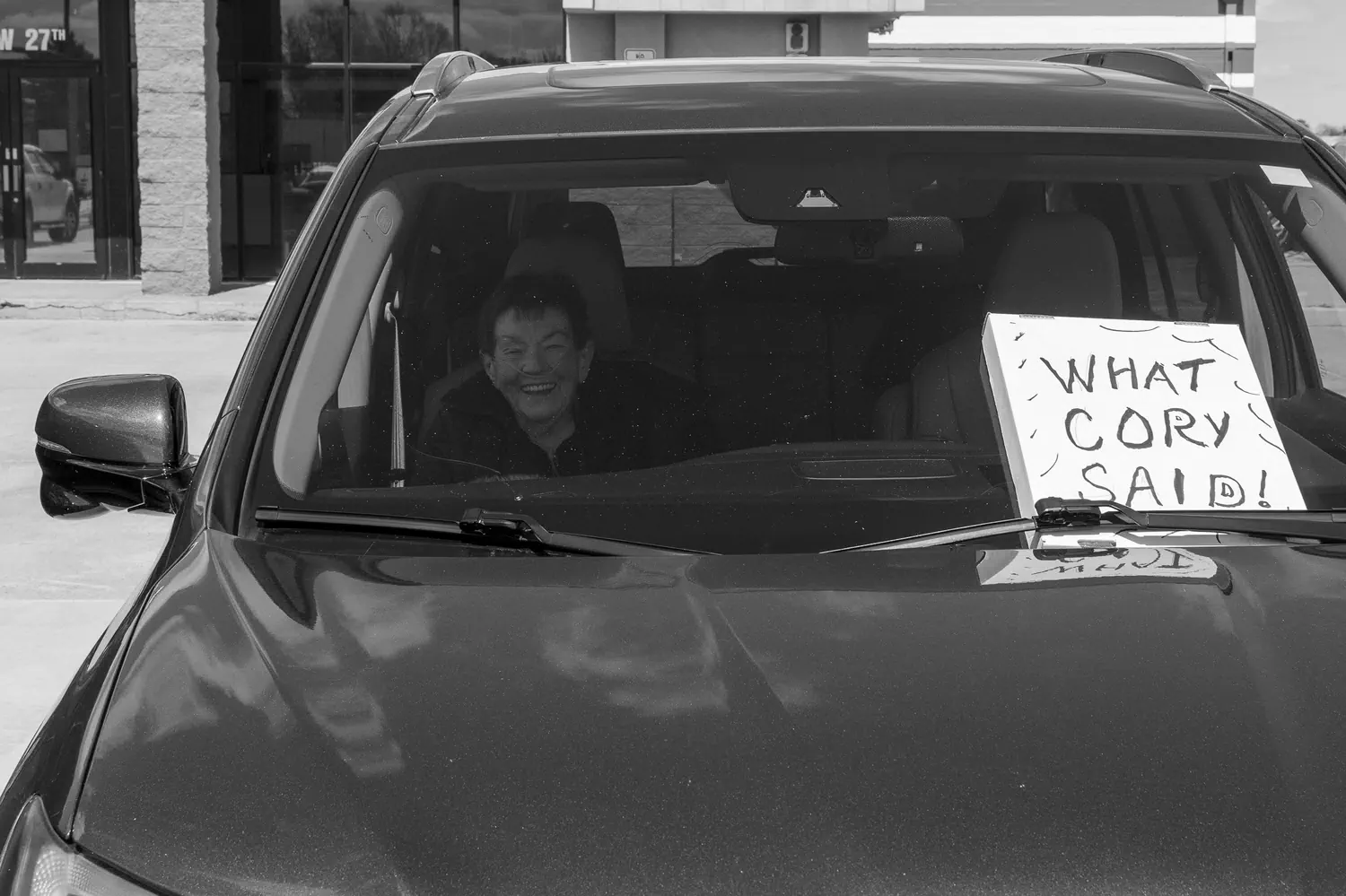
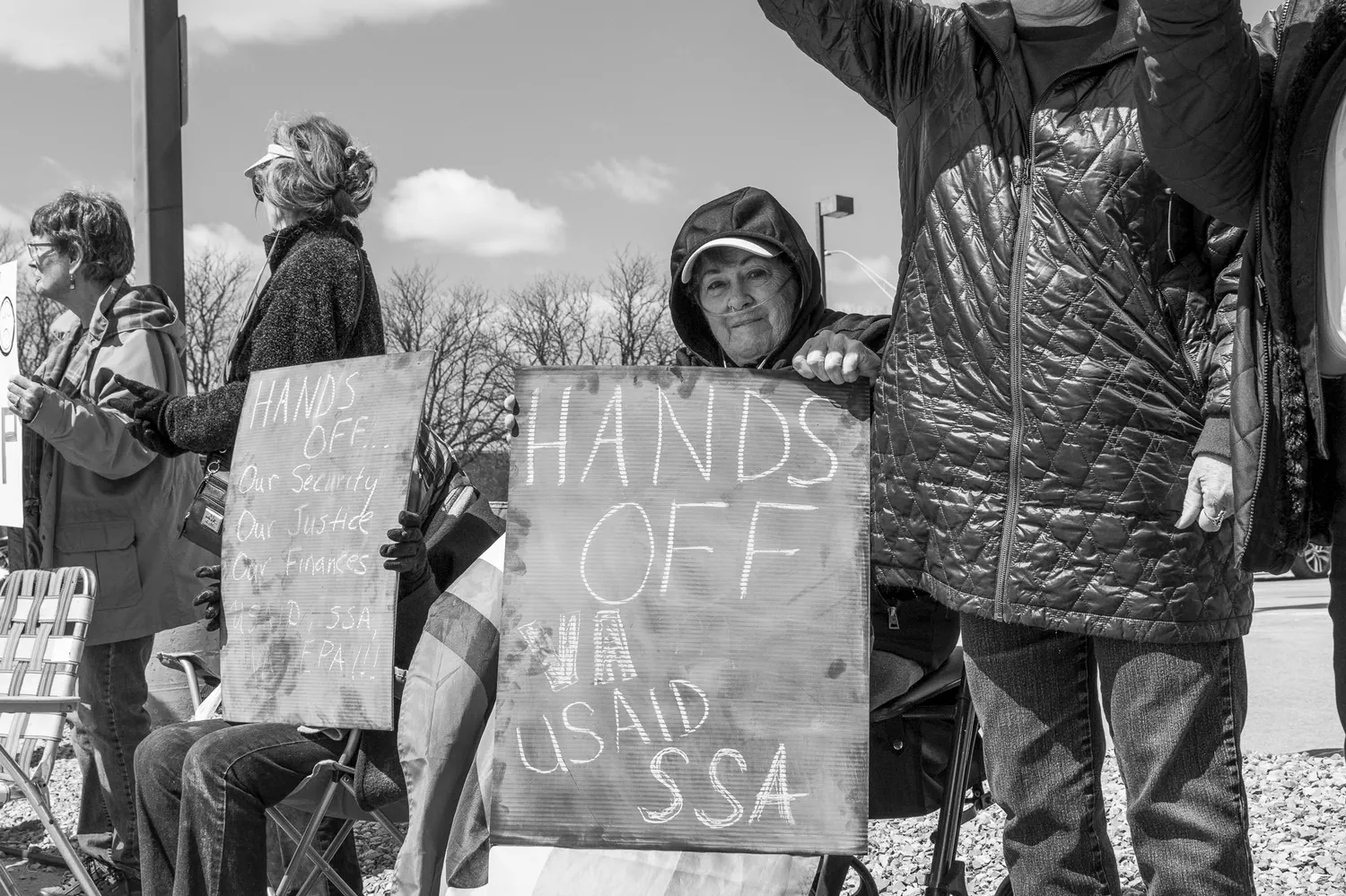
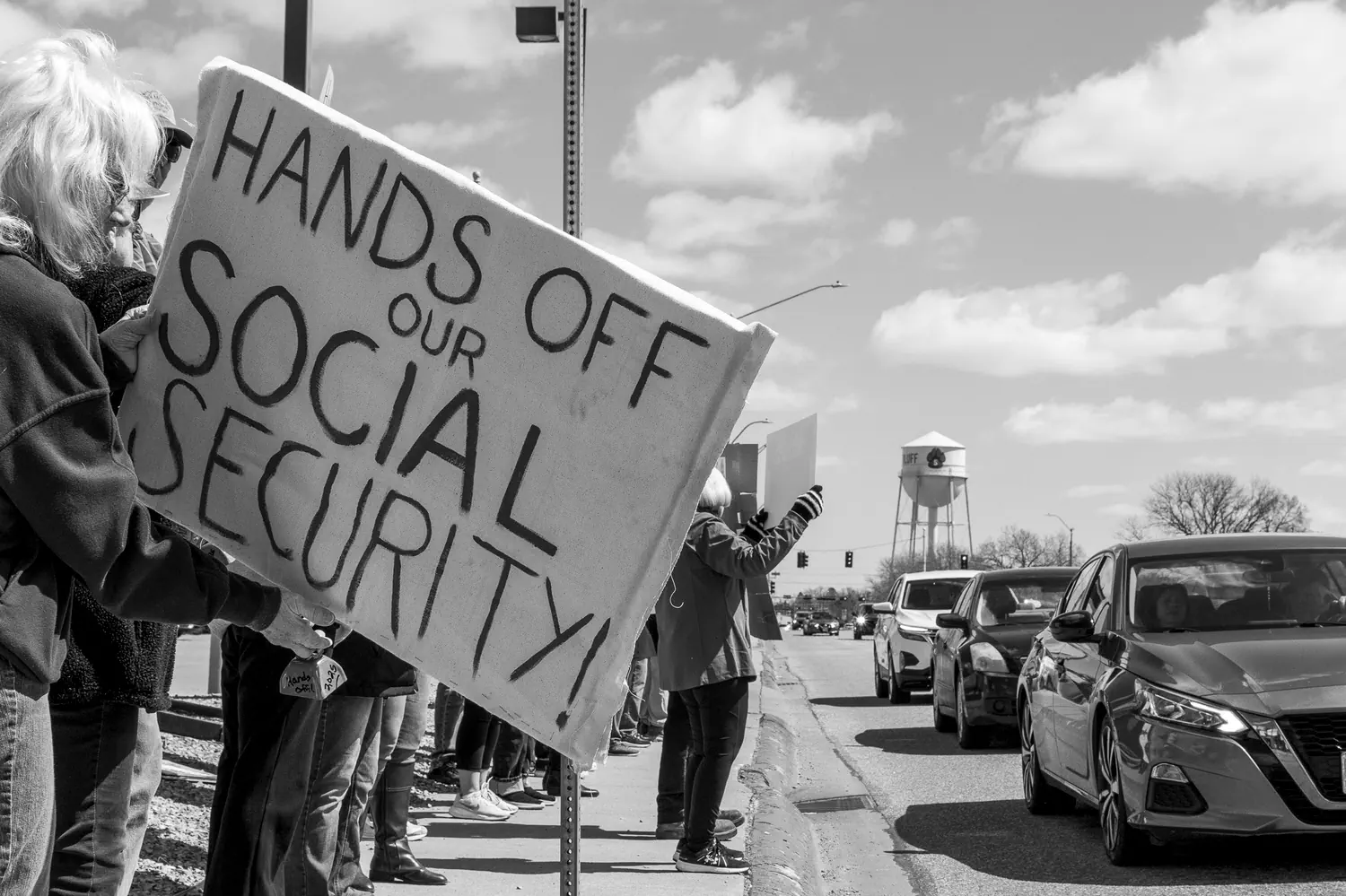
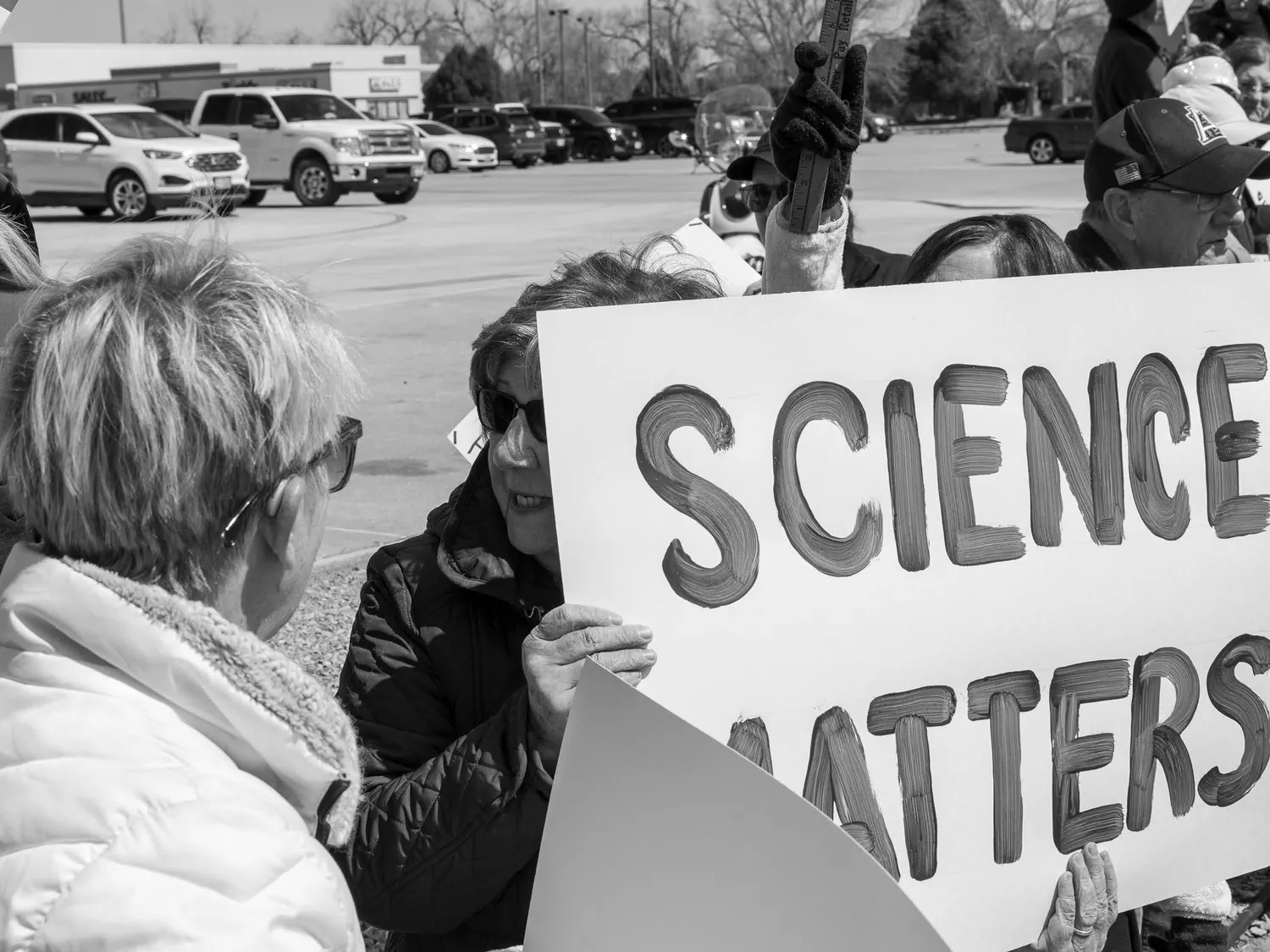
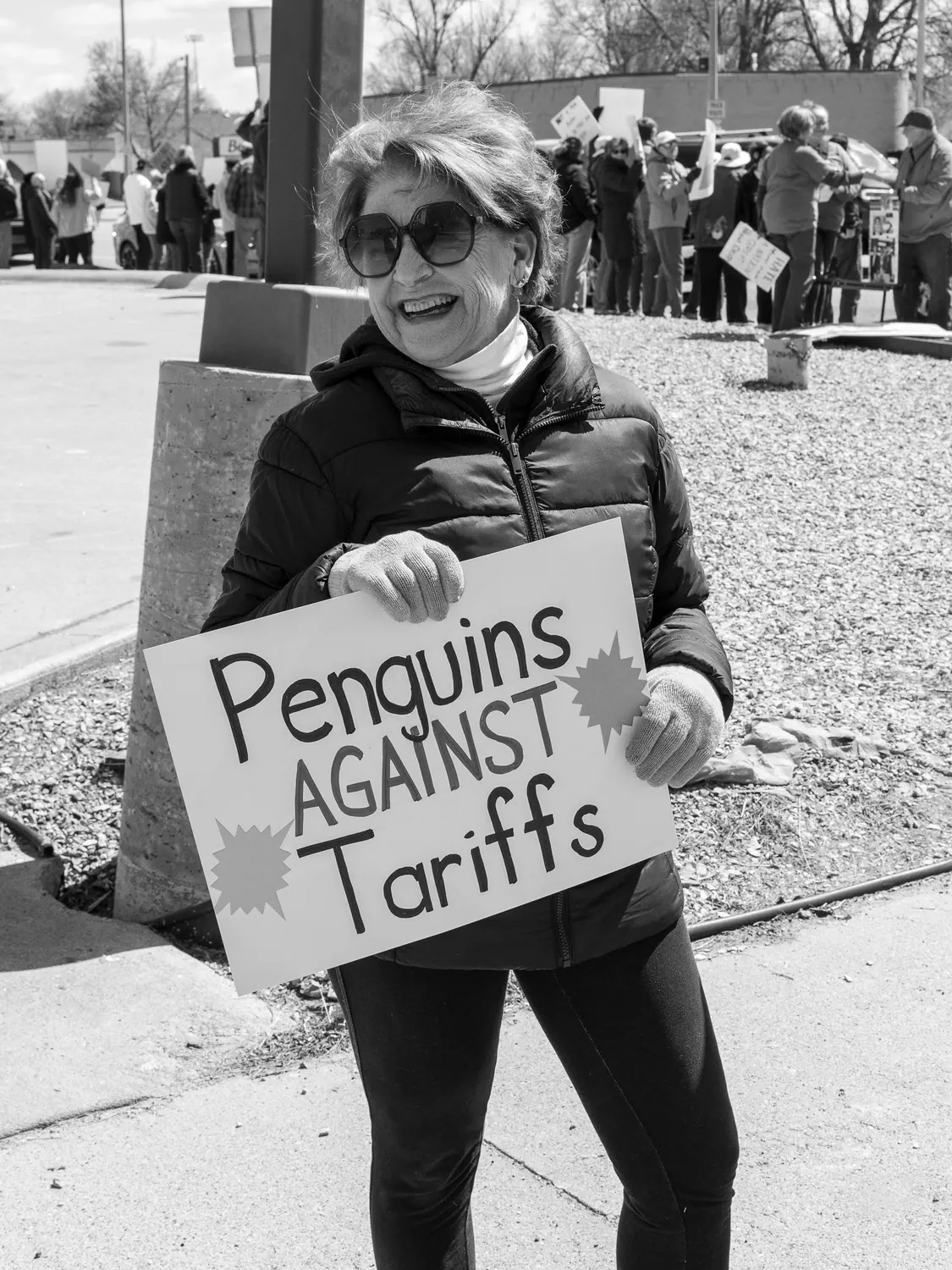
On April 2, 2025, the Scotts Bluff County Panhandle Democrats gathered in Scottsbluff, Nebraska, to protest the Trump administration as several political issues came under public demonstration. The event coincided with the nationwide “No Kings” marches held that April.
Civilization has a funny safety valve built into it: people talking loudly in public squares. Protest looks messy from the outside — cardboard signs, off-key chants, somebody always brings a drum — but politically it performs a very specific job. It is feedback. Governments, like any large system, drift. Bureaucracies optimize for procedure, not people. Voting corrects course every few years; protest corrects course in real time. When citizens gather in the open, they are not overthrowing a system — they are informing it that reality on the ground no longer matches the paperwork.
History quietly confirms this. Labor protections, civil rights legislation, women’s suffrage, even the weekend itself were not gifts delivered by polite letters alone. Officials rarely wake up one morning with a spontaneous urge to reduce their own power. Pressure creates attention, and attention creates negotiation. Peaceful protest is therefore less a threat to democracy than one of its maintenance tools, like changing the oil in an engine. Without it, frustration moves underground, and underground pressure eventually becomes dangerous.
There is also a human reason. A protest turns private worry into shared experience. People discover they are not isolated, that their neighbors are thinking about the same problems. That realization changes behavior. Citizens who feel seen participate more — they vote, attend meetings, and hold local institutions accountable. A community that never gathers in disagreement does not have harmony; it has silence. And silence, historically speaking, is where democracies actually start to fail.